Lockdown will remain intact until jabs are administered far and wide - with government ministers repeatedly emphasising that the vaccine is our ticket out of here.
The development of vaccines at the tail-end of last year had injected some much-needed hope for the future, with many anticipating and expecting some brighter months ahead.
But any NYE good cheer was dampened quickly, with soaring cases forcing England to re-enter hibernation on January 4 to relieve pressure on the NHS.
Lockdown will remain intact until jabs are administered far and wide – with government ministers repeatedly emphasising that the vaccine is our ticket out of here.
Progress is good.
More than 10 million people have received a jab so far, with the government on target to vaccinate the most at-risk people in Britain (care home staff and residents, those aged 70 or over, frontline workers and clinically vulnerable) by February 15.
The latest data has also shown that the Oxford-AstraZeneca jab has a “substantial” effect on transmission, and just a single dose could offer 76% protection three months on.
Cases, too, are falling – with the rolling 7-day average down from nearly 60,000 positive tests to 21,000 in the space of a month.
Bernard Sharp / Geograph
The major obstacle to the road to normalcy is the emergence of new variants.
A strain found in South Africa is currently causing most concern, with scientists believing it may be more transmissible and slightly more resistant to vaccines (although formulas are in the process of being tweaked to ensure maximum effect).
In the meantime, the government is focusing on ramping up the rollout with the aim of vaccinating every adult by the end of June, according to The Telegraph.
This optimism is also being shared by certain members of academia, with Professor Andrew Hayward, – expert in infectious disease epidemiology and inclusion health research at University College London – telling The Mirror that things could be looking up by the summer.
He stated: “Once the most vulnerable people, particularly those over-50 and those with chronic illnesses, are vaccinated then yes, I think we can see a significant return to normality.
“I think what we’ll see is a phased opening up as vaccination levels increase. Then we’ll be more or less back to normal for the summer, I would imagine.”
The Bank of England is also predicting the economy to bounce back at speed – claiming that GDP would “recover rapidly” throughout the course of 2021.
Health Secretary Matt Hancock has expressed hopes for a “great British summer”, which have been echoed by Vaccines Minister Nadhim Zahawi.
David Dixon / Geograph
After a pretty torrid winter, the outlook for the UK appears to finally be improving, but there remains a huge question mark as to whether the virus will soon dwindle to tiny numbers like it has in nations such as New Zealand.
Strict border controls are also likely to remain in place for travel to any other nations where COVID variants emerge, and Dr Clare Wenham, assistant professor of global health policy at London School of Economics, said it could be another two or three years until complete normality is restored.
“This pandemic isn’t going to be over until it’s over globally,” she told Sky News.
“We’re still going to be living in some form of restrictions – travel restrictions, border controls – even when we’re vaccinated, until it’s over round the world. So there’s a real imperative to make sure that everybody round the world has at least minimum levels of vaccines at the same time.”
Prof Helen Rees, who sits on the World Health Organization’s (WHO) committee for Covid-19, agreed that normal life was many months away.
She told the BBC: “I’m afraid to say… I think we are going to be well into next year before we see a change.
“The mask-wearing, the distancing – all of the measures that we have put in place – will have to continue.
“This virus is nasty and this virus knows how to change. If we want to get rid of it, my advice to the politicians is to continue what you are doing – to have these measures.”
Over the course of the next few weeks, it is likely we will begin to see a gradual lifting of lockdown measures across the UK.
Schools are being tipped to return on March 8 in England – with Scotland already confirming a return for some pupils later this month.
The week of February 22 will bring us the next big update – as Boris Johnson unrolls his roadmap to exiting lockdown and announces what will reopen on which dates; including shops, pubs, gyms and hairdressers.
After this announcement, the fuzzy outlook for the rest of 2021 should come into sharper focus.
It may still involve face coverings and keeping a distance. But also far more freedom.
Trending
Pep Guardiola hints at when Manchester City fans can expect to see their latest arrival
Danny Jones
Manchester City manager Pep Guardiola has given supporters a rough timeline as to when they can expect to see their new signing, or at least their latest arrival, make his first appearance.
The Blues wrapped up the January transfer window with four major signings: their new attacking number seven, Omar Marmoush (who has already bagged a hattrick on his home debut) promising defensive duo, Abdukodir Khusanov and Brazilian Vitor Reis, as well as their ‘mini-Rodri’, Nico Gonzalez.
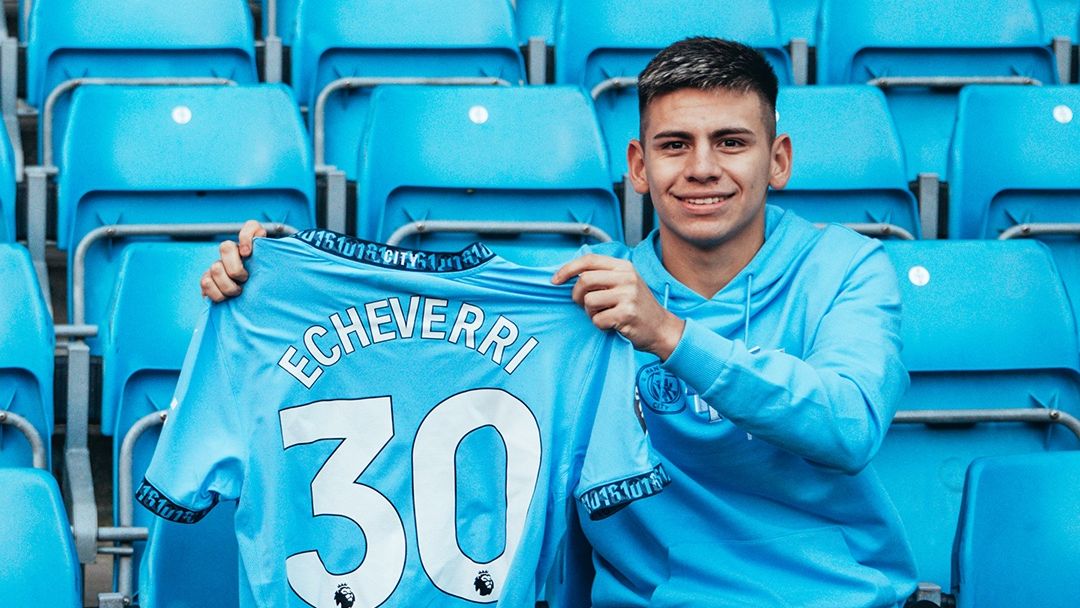
However, the club has had another late arrival who was technically signed back at the start of last year but who has spent for the last 12 months or so loaned back to his previous parent club, River Plate in Argentina, waiting to make the move over to the Etihad Stadium – and now he’s here in Manchester.
Speaking on his touchdown in 0161, Pep said Claudio Echeverri won’t be thrown into first-team action straight away but did give a rough estimate as to when City fans could expect him to get involved. You can see him discussing the integration plan in his post-match press conference following the Spurs win.
The mention was only brief but there’s still plenty of reason for Man City fans to be excited by the late January signing.
“Yeah, he [Claudio Echeverri] is going to start to train and mainly will be for the end of the season, maybe the [Club] World Cup and as soon as possible [that] he arrives he can adapt quick for the future.”
As mentioned, the 19-year-old Argentinian attacking midfielder from Resistencia officially put pen to paper with CFG back in January 2024 and was quickly dubbed ‘the next Messi’.
Now, although the football world is often quick to jump the gun with these things and he isn’t the first and certainly won’t be last to be slapped with this premature title, he’s done more to back up these claims since then than he has rubbish them.
Starring at the 2025 Under-20 South American Championships, netting six goals in nine games to finish the tournament as the second highest scorer thanks to notable braces against Brazil and Uruguay as the young Argentine’s finished as runners up.
He also notched 48 senior appearances for River Plate thus far, netting four goals and grabbing eight assists in that time, not to mention having already captained his national team at the 2023 Under 17s World Cup, where he scored another five.
Safe to say there’s plenty of talent to be tapped in this lad.
Once again, Echeverri won’t go straight into the senior set-up for a little while yet, barring a major injury crisis, but he’ll be a more than exciting addition to the City Football Academy and for future first-team lineups for years to come.
Who knows, maybe he’ll be included in an FA Cup matchday squad? Nevertheless, you can expect him to not just come of the bench but hopefully show what he can do at the Club World Cup this summer.
City‘s first fixture as reigning champions of the competition will be against Moroccan side Wydad AC on 18 June 2025.
You can watch Echeverri’s first full interview as a Man City player down below:
The new Man City signing is excited to be finally be part of the club 13 months on from agreeing his contract.
Rochdale has been named Greater Manchester’s ‘Town of Culture’ for 2025
Emily Sergeant
Rochdale has officially been named Greater Manchester’s Town of Culture for 2025.
Taking over the reins from Bolton – which held the title in 2024 – and following in the footsteps of Stockport before that, which held the title in 2023, and even hosted a massive ‘Town of Culture Weekender’ festival with 50+ free events to celebrate and bring its title year to a close, it’s now the turn of the north-eastern Greater Manchester borough of Rochdale.
Rochdale’s year will build on the town’s already-rich cultural history and international reputation as the home of the co-operative movement.
More than 35 arts organisations will be bringing together an ambitious programme of festivals, exhibitions, events, and performances throughout the year.
Unfamiliar with what the ‘Greater Manchester Town of Culture’ title is all about? It’s an accolade that’s handed out every year to different boroughs across the region.
Bury was the inaugural title-holder 2020 and held onto it in 2021 too due to the COVID pandemic, before being followed by Stalybridge in 2022, Stockport in 2023, and of course, Bolton in the year just gone.
The title celebrates Greater Manchester’s culture and heritage.
As well as getting a new title to shout about, it also sees the towns given a grant from the Greater Manchester Combined Authority (GMCA) culture fund to help develop a programme of cultural events and activities throughout the year.
Rochdale has been named Greater Manchester’s ‘Town of Culture’ for 2025 / Credit: The Manc Group | Rochdale Council
In Rochdale’s case, you can expect the ‘very best local talent’, as this year is promising to put ‘people power’ centre stage, with residents helping to plan, develop, and deliver a lineup of creative activities, alongside a number of major events.
This includes the popular free days out for families, an exciting new urban arts festival, two different food and drink festivals, a lantern parade, the Ignite Fire Festival, a Pride parade, and so much more.
You can also expect live music performances, a new people’s gallery, and even some major international collaborations that are yet to be announced.
Rochdale is taking over the reins from Bolton, which held the title in 2024 / Credit: Rochdale Council
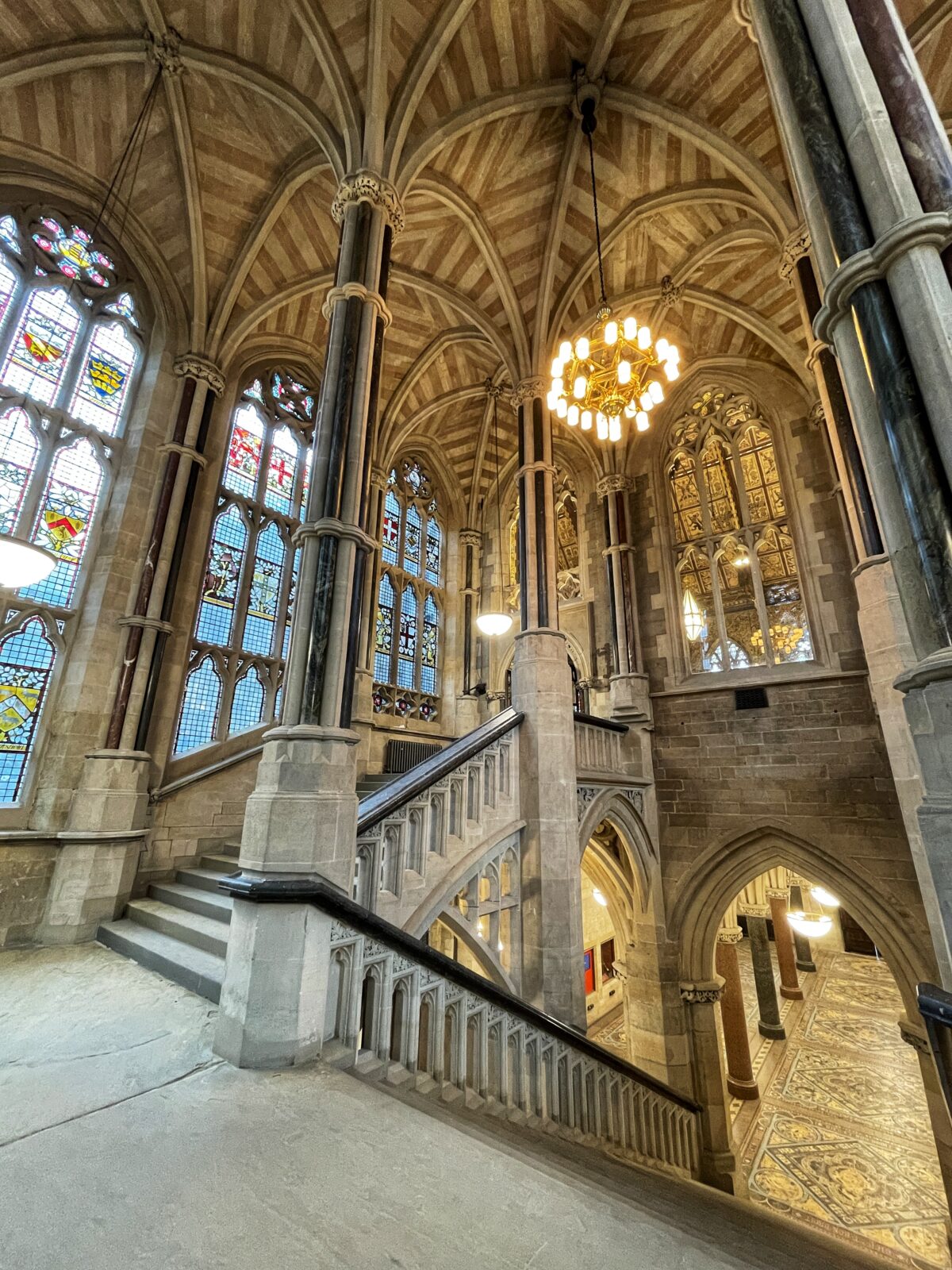
“Rochdale is a place with a rich cultural history, so it is great to name it Greater Manchester’s town of culture as it’s town hall and town centre enter a new era,” commented Greater Manchester Mayor Andy Burnham as the borough was crowned this week.
“Rochdale submitted a fantastic bid for this which, was incredibly exciting and ambitious, while being firmly rooted in its local talent and deep history.

 The Manc -
5th February 2021
The Manc -
5th February 2021