Feature
The Blanket March: How thousands of Manchester weavers fought for the textile industry
You've heard of the Peterloo Massacre, but what about the lesser-known protest that happened in the same place only two years before?
 Emily Sergeant -
16th August 2022
Emily Sergeant -
16th August 2022 
You’ve heard of the Peterloo Massacre, right?
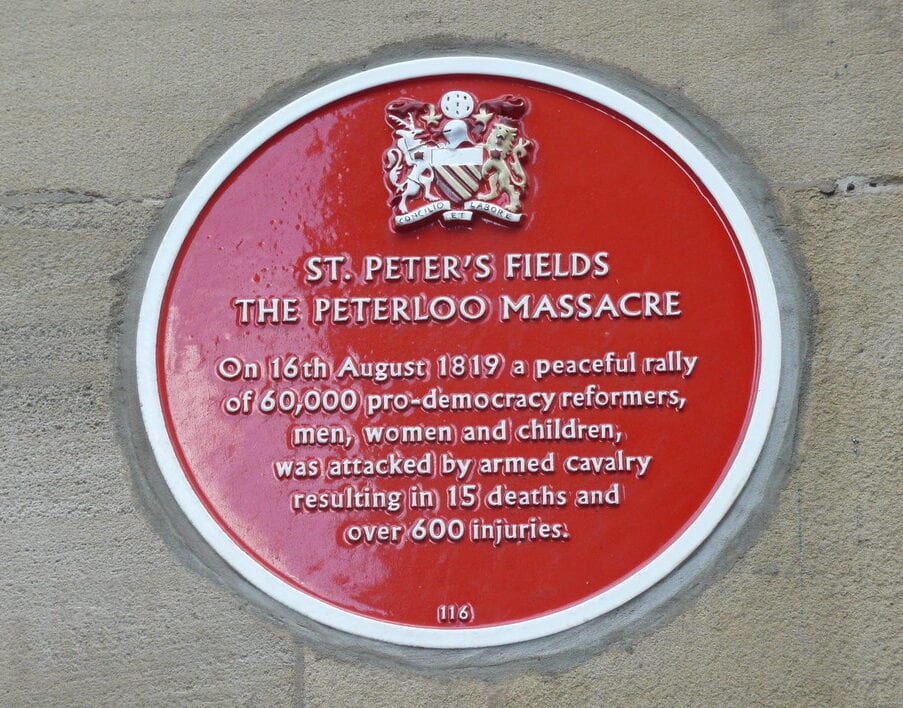
This historic event – which took place on St Peter’s Field in Manchester in 1819, and saw sword-wielding horsemen charge into a large crowd to disperse a non-violent demonstration demanding to reform parliament, ultimately killing 18 people – is well-known among Mancunians, and has been the subject of many a book and film over the years.
But what about the events leading up to the Peterloo Massacre?
Ever heard of another peaceful protest that took place on the same St Peter’s Field only two years before, and also ended in violence and arrests?
This is the story of the ‘Blanket March’.
What was the ‘Blanket March’?
In a nutshell, the ‘Blanket March’ or ‘March of the Blanketeers’ was a demonstration organised by the Manchester Radicals on 10th March 1817 with the intention being for the participants – who were mainly Lancashire weavers – to march to London and petition the Prince Regent over the desperate state of the textile industry in the region, and to protest over the recent suspension of the Habeas Corpus Act.
The Habeas Corpus Act previously ensured that no one could be imprisoned unlawfully.
Although fully intended to be a peaceful protest, this so-called ‘Blanket March’ was broken up violently and the leaders of the march imprisoned.
What happened in the lead-up?
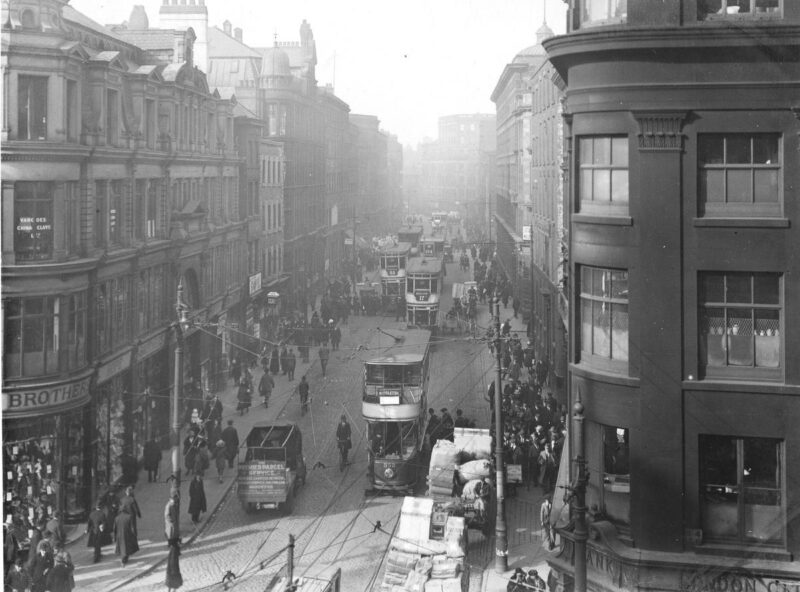
After the Napoleonic Wars ended in 1815, England was immediately plunged into economic hardship and the industrial textile towns of the North saw wages fall sharply as the factory system took hold, with traditional handloom weavers being some of the worst affected.
Weavers – who could have expected to earn 15 shillings a week in 1803 – saw their wages dramatically cut by two thirds or more.
If that wasn’t bad enough, then came the Corn Laws of 1815.
The Corn Laws – which were originally intended to protect British agricultural workers from cheap foreign imports – actually ended up causing an increase in grain prices and a decrease in supplies, only adding to the poor’s woes, and then these hardships were further compounded by poor harvests the following year, which resulted in food shortages during the winter of 1816-1817 and the year being dubbed the “Year without a summer”.
With no way for the ordinary people to make their voice heard – no vote, public meetings banned, unions illegal, the press censored, and the authorities even using paid informers and spies to rat on anyone who tried to organise a protest – the discontent continued and lead to riots, as Lord Liverpool’s government faced growing demands for social, political and economic reform.
Meanwhile, in Manchester, a spirit of new radicalism was dawning.
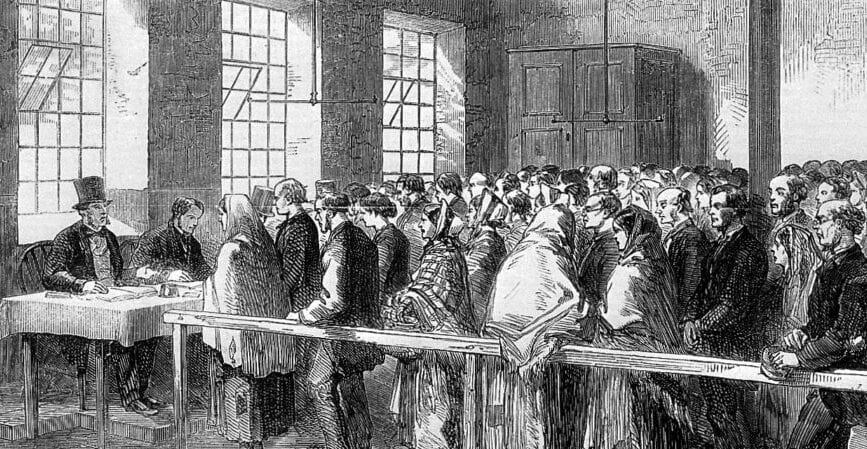
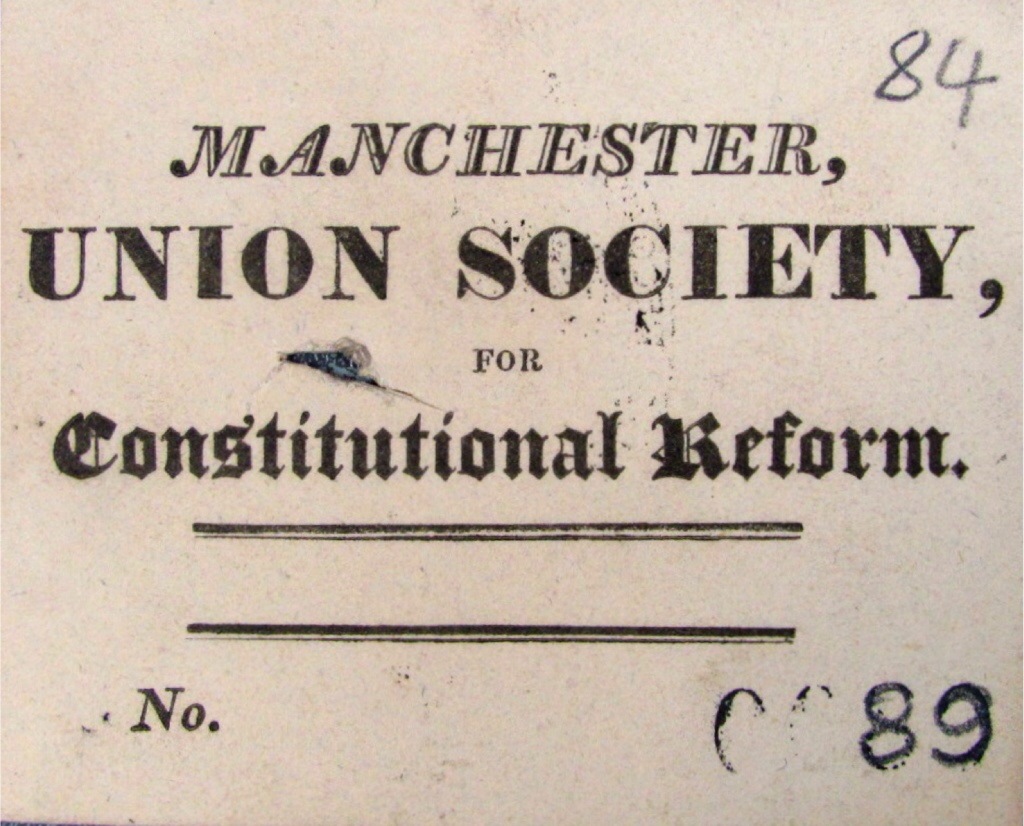
Initially inspired by the writings of Thomas Paine and the French Revolution, political discussion – which at one time was confined to London coffee houses – had been taken up by the labouring classes. Although the Napoleonic Wars put a dampener on radicalism for a period, the economic depression following the defeat of Napoleon and growing discontent with the political system caused this new radical movement to appear, and for the first time, the North – more specifically Manchester and South Lancashire – was a hotbed of political activism amongst the working people.
With considerable input from Northern Radicals, a Reform Bill for universal suffrage was drafted and presented to the House of Commons in January 1817 by Thomas Cochrane.
But when this was rejected on procedural grounds, the Prince Regent’s coach was attacked on his way back from parliament, and this, combined with the fallout from the Spa Fields Riots the previous November, caused the government to embark upon a number of measures to repress the radicals, including the suspension of the Habeas Corpus Act.
So, in early in March 1817, advocated by two prominent Manchester radicals, Samuel Drummond and John Bagguley, a ‘hunger-march’ to London was organised.
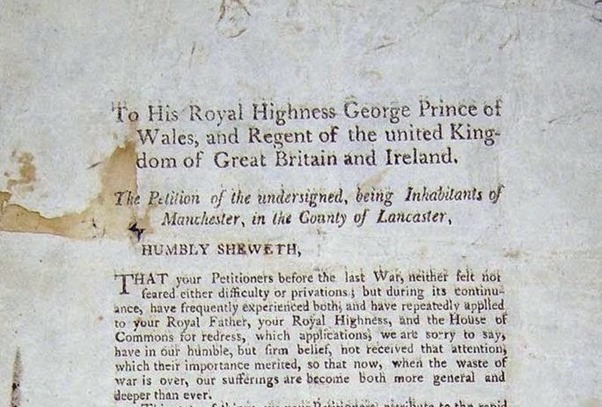
Designed as a way of drawing attention to the problems of the Lancashire cotton workers, it was proposed that weavers and spinners would march in groups of ten – as a way of avoiding any accusation of mass assembly – each with a blanket on their back and a petition to the Prince Regent fastened to their arm.
“We will let them see it is not riot and disturbance we want. It is bread we want. And we will apply to our noble Prince as a child would to its Father for bread.”
As well as keeping them warm at night, the blanket would indicate that they were textile workers.
What happened at the march?
The organisers aimed for 100,000 marchers by the time they reached the capital and although that was the target, it was sadly not met, but still, on 10th March 1817, around 5,000 marchers – mostly spinners and weavers – convened in St Peter’s Field.
Reports claim that there was also a large crowd of onlookers, perhaps as many as 25,000 people in total.
Despite all the efforts by the Blanketeers to show that they were peaceful though, the local magistrates ordered the Riot Act – which told protestors to go home of face arrest – to be read out in public, and the King’s Dragoon Guards broke up the meeting and arrested 27 people, including Drummond and Bagguley, throwing the demonstration into disarray.
Nevertheless, several hundred men set off in the drizzling rain, but the cavalry pursued and attacked them, meaning hardly any got further than Macclesfield and most no further than the River Mersey at Stockport, with many marchers choosing to either scatter or drop out, or were instead taken into custody by police and yeomanry.
The majority were turned back or arrested under vagrancy laws before they reached Derbyshire, and in Stockport, over two hundred marchers were arrested and several wounded, but with the gaols full, the authorities had nowhere for them and simply sent them home.
Fearing arrest, most marchers now dropped out.
There were stories, although unconfirmed, that just one marcher – variously named as “Abel Couldwell” or “Jonathan Cowgill” – reached London and handed over his petition.
The aftermath
Of the demonstrators who were arrested, many were released – often without trial – after spending varying amounts of time in prison, an although this protest fizzled out, the pattern of discontent, radicalism and insurrection in Manchester created a fear of revolution amongst the ruling classes.
The government also clamped down on press comment and radical writing.
It had already passed the Power of Imprisonment Bill in February 1817 and the Seditious Meetings Act in March of that year as a direct response to the ‘Blanket March’, and on 12th May, Home Secretary Lord Sidmouth circulated instructions to the Lords Lieutenant that magistrates could use their own judgement on what constituted “seditious or blasphemous libel” and could arrest and bail anyone caught selling it.
The Six Acts – legislation aimed at suppressing meetings for the purpose of radical reform, which followed the Peterloo Massacre – would also include further restrictions designed to limit the freedom of the press.
The ‘Blanket March’ and the subsequent conspiracy alarms led the Manchester magistrates to form the short-lived Manchester and Salford Yeomanry cavalry, which was intended to combat any future attempts at insurrection.
It became infamous two years later for its role in the Peterloo Massacre.
Featured Image – The History Press