The land of the ‘pie-eaters’: Why is Wigan obsessed with pies?
The first seven days of March is British Pie Week; a period where this glorious pastry-and-filling is given its deserved recognition right around the country. But there’s one town in Greater Manchester where every week is Pie Week: Wigan.
The beginning of March marks British Pie Week; a time of year where the glorious pastry-and-filling dish enjoys renewed recognition right around the country. But there’s one town in Greater Manchester where every week is Pie Week. Wigan is known as the land of the ‘pie-eaters’ – although there’s more history behind that nickname than you might think...
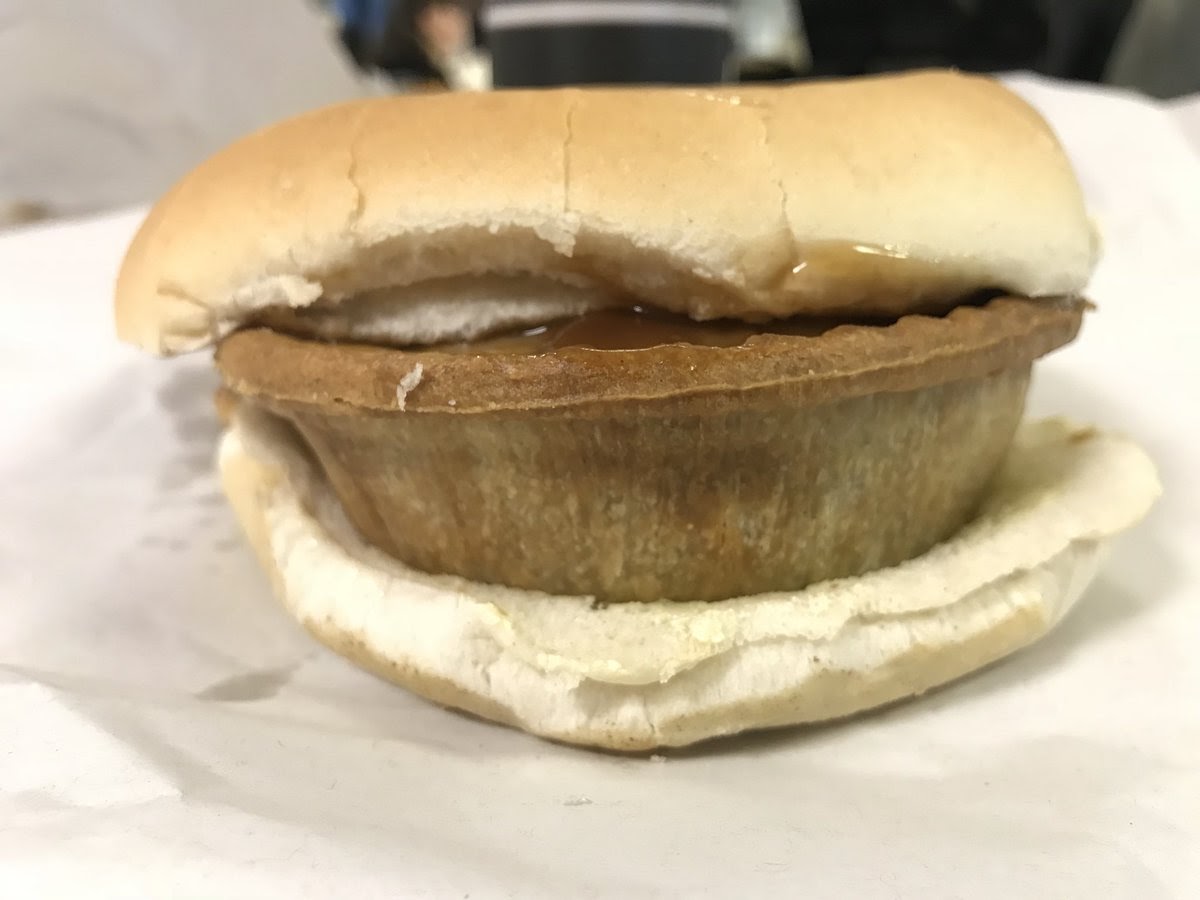
In Wigan, they treat pies a little differently / Image: David Blake via Twitter
On a balmy summer evening back in 2002, I was caught up in a current of Wigan rugby supporters, all gently floating in a sea of Cherry and White t-shirtstowards the JJB Stadium turnstiles.
St Helens were in town for rugby league’s flagship fixture, and the game was a near-sellout.
Wigan vs Saints invariably pulls in a massive crowd; with the two teams old enemies since time immemorial. The clubs are separated by just 9 miles and a grassy hill called the ‘Billinge Lump’; representing rival regions since the county borders were moved in 1974 (it’s now Greater Manchester v Merseyside, rather than a Lancashire derby).
The game was one of my first visits to the rugby as a young ‘un, and whilst my memories of the match itself are fuzzy, what has stuck with me ever since is the sight of Saints fans suddenly breaking out into a strange song.
I didn’t quite understand the lyrics, so I tugged on my grandad’s coat sleeve and asked him: “Why do they keep shouting ‘pie-eaters!’ at Wigan?”
The St Helenian answer to that question – and one that’s often told in nearby towns – goes something like this…
In 1926, more than one million coal miners were at loggerheads with pit owners over wages and working conditions. So, in a show of solidarity, many British workers went on strike. The protests lasted for several days, but Wigan workers were apparently among the first to return to their shifts – and in doing so were said to be ‘eating humble pie’.
They’ve been teased about it ever since. But according to Wiganers, that’s a little unfair.
Some point out that whilst Wigan workers were the first to stop striking, they were also the first to start. Others claim that townsfolk had the pie moniker long before the unrest of 1926.
But perhaps the true origins of the nickname don’t matter. Because labelling Wiganers as ‘pie-eaters’ works on an elemental level, anyway.
Idioms aside, Wigan is a place that is inescapably besotted with pies.
The town’s penchant for pastry is everywhere. I noticed it from the moment I first set foot in Wigan’s sport stadium as a kid – from the pie posters slapped across the walls of the concourse to the pastry offer announcements crackling across the PA system. An advert for ‘POOLE’S PIES!’ (a company which produced pies in Wigan for 171 years) even danced its way across the scoreboard during the game.
Poole’s has sadly folded since then. But there’s still a minimum of 20 listed pie shops operating in the Wigan region today (with dozens of local cafes and food stores serving up pies as part of their wider menus).
Since 1992, Wigan has also been the prideful host of the World Pie-Eating Championships – where contestants aim to wolf down as many of these crumbly concoctions as quickly as possible (historically held at Harry’s Bar on Wallgate).
See, in Wigan, it’s socially acceptable to tackle any type of pie, at any time of day, in almost any way.
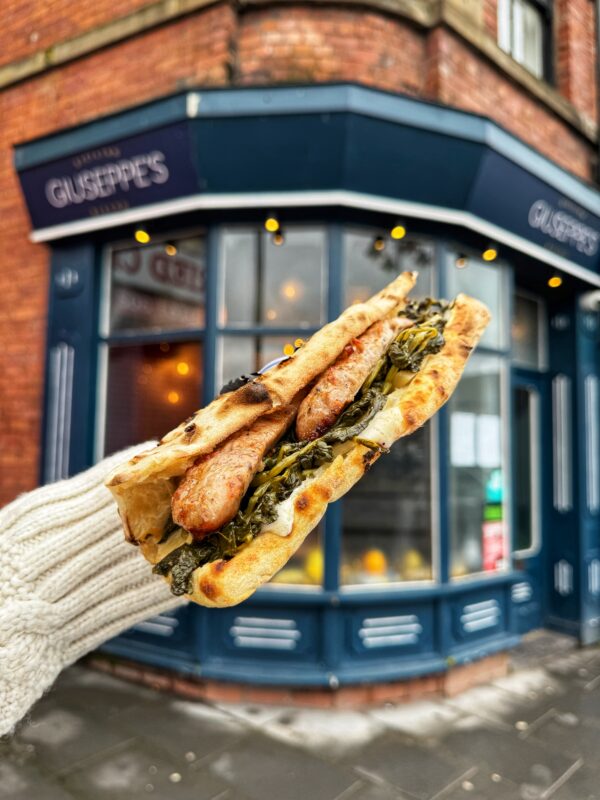
Residents even put pies between two slices of bread for a snack; which is known as a ‘Wigan Slappy’ or ‘Wigan Kebab’ (a local delicacy with the latter name features three pies impaled on a stick).
It’s true that many Wiganers are happy to embrace their passion for pies with good humour, but some evidence suggests that pies here are no laughing matter.
Wigan journalist David Barnett – who has written multiple pieces on the topic – concludes that pies are in fact a “way of life” for denizens. During his time working at the Wigan Evening Post, a fire ripped through the town’s pie factory, and Barnett was sent to cover the story. Despite the disaster, shutting down pie production was seemingly out of the question. Instead, the company drafted in “emergency pie-makers” to work through the night and get pie deliveries out on time. The article made the front page.
Wigan’s appetite for pies has been rumbling for decades – and remains insatiable to this day.
One of the most recent examples of this fixation can be found in 2019 – when Wigan Athletic needed a new mascot for their football team. Club officials turned to local school children for inspiration – and over half of entries featured a pie in the design.
Wigan’s love affair with pies is well-entrenched and utterly unapologetic.
When one study dared to rank nine regions above Wigan on a list of the UK’s top pie-loving places, World Pie-Eating Championships organiser Tony Callaghan was aghast.
“I’m stunned. This can’t be right,” he told Wigan Today.
“The table is very misleading. Everyone knows that Wigan is the capital of the pie world and home to the World Pie-Eating Championships. It goes down in history as such.
“Even now the pie shops are open and they’ve been trading throughout the pandemic. Wiganers can’t get enough of them.”
Wigan has revelled in many other achievements outside the oven, of course.
It’s home to one of the most successful rugby league teams of all time in Wigan Warriors. It also has a plucky little football club that has repeatedly defied the odds to make sporting headlines (including a famous FA Cup triumph over Man City in 2013). The town’s name features in the title of classic Orwellian work The Road to Wigan Pier. And Wigan is also the birthplace of legendary singer-songwriter George Formby.
But every time British Pie Week rolls around, all eyes are always on the Greater Manchester town for its inextricable link with the golden brown grub.
Wiganers, meanwhile, will be scoffing down pie barms as if it were any ordinary time of year.
That’s what they do there. It’s a town with pie-sonality…
Feature
Review | Snow Patrol roll back the years at Co-op Live for a mini-Manc’s first gig
Danny Jones
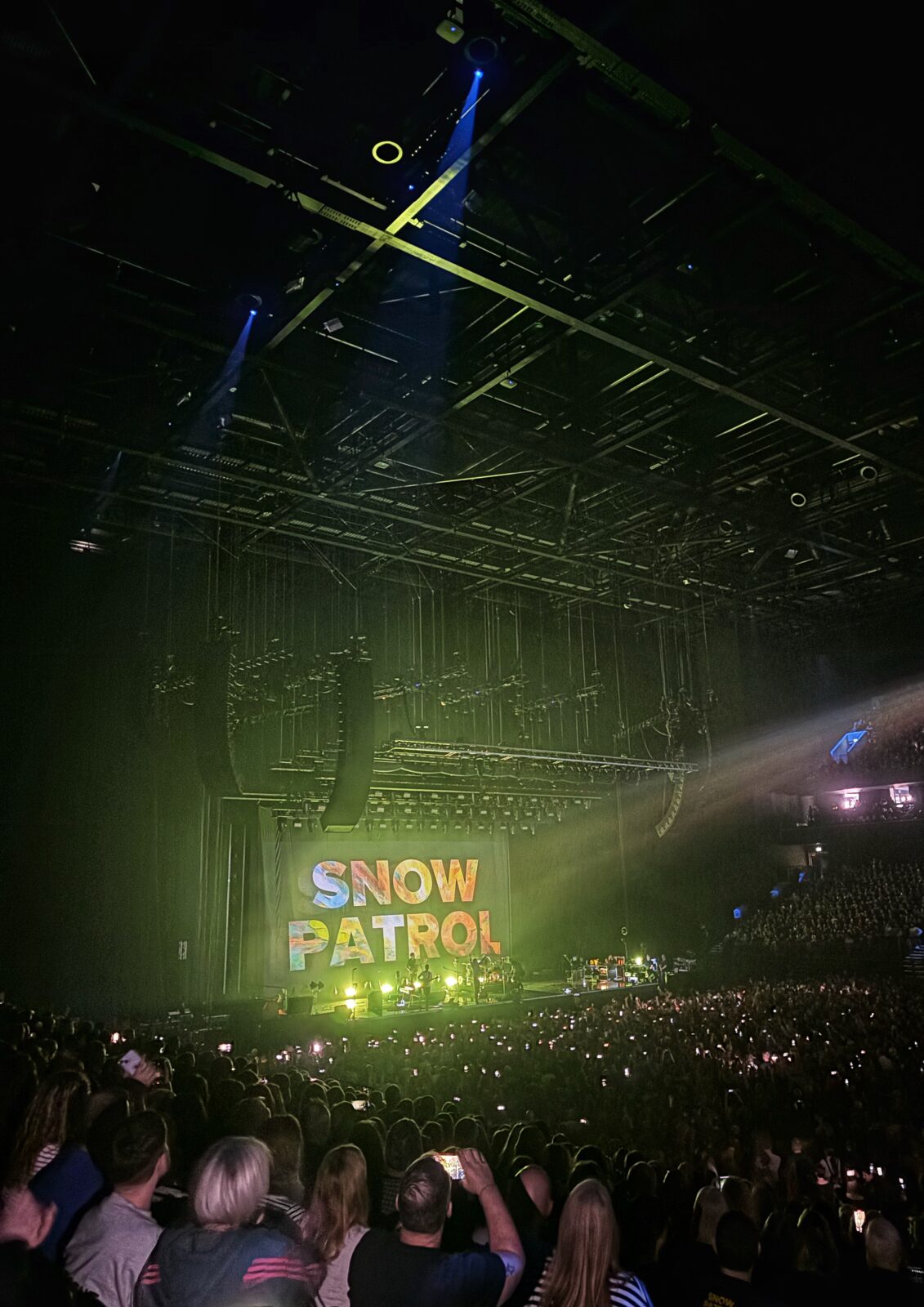
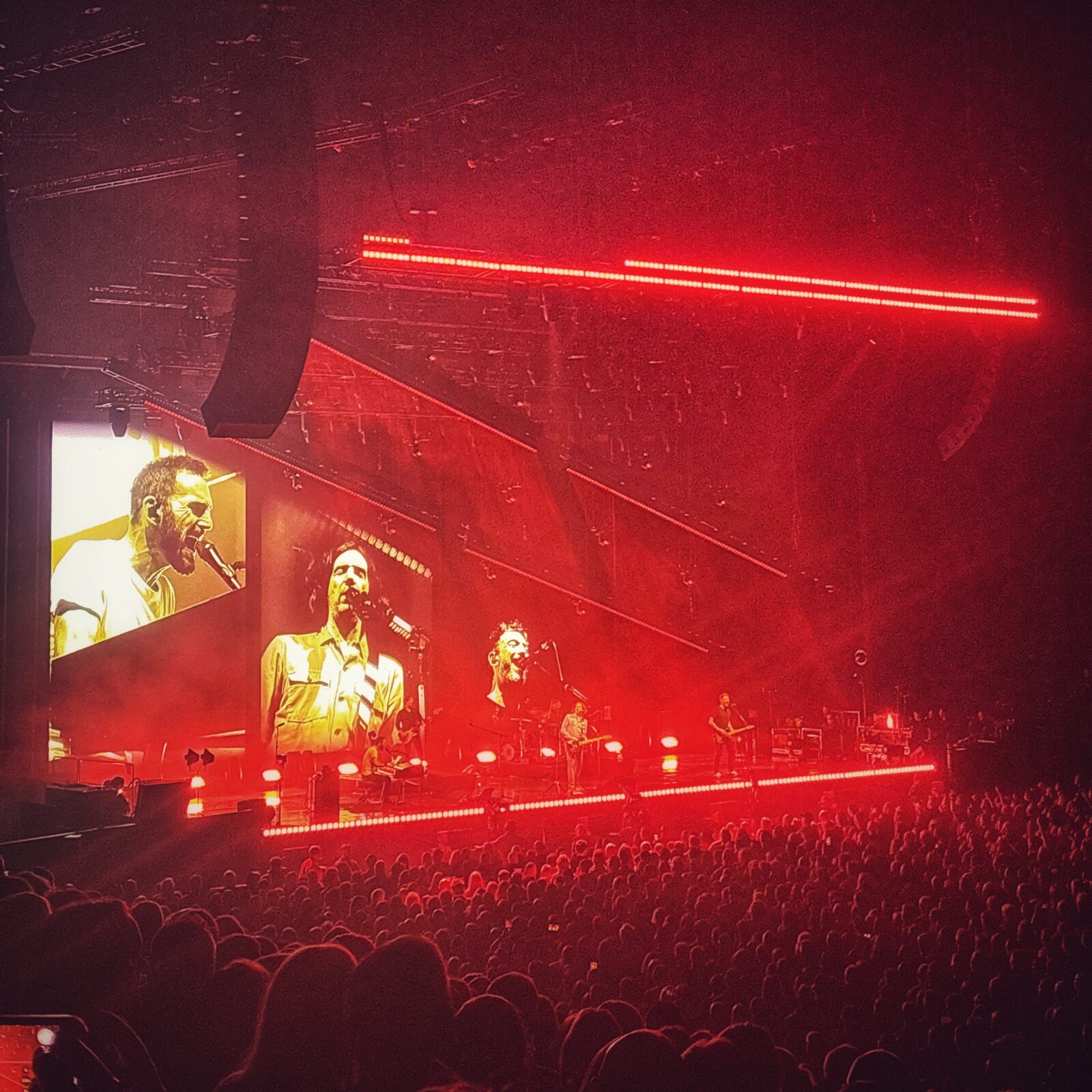
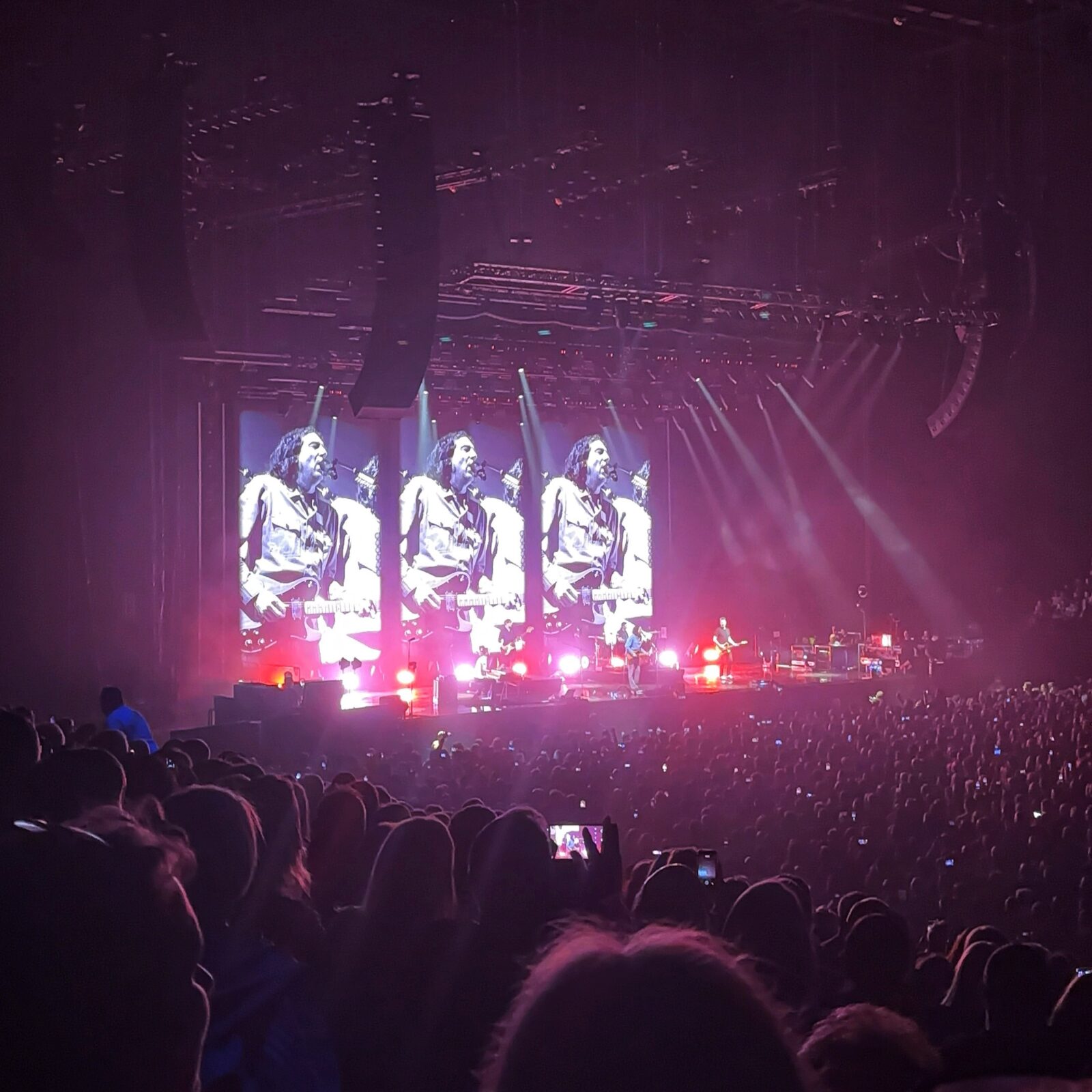
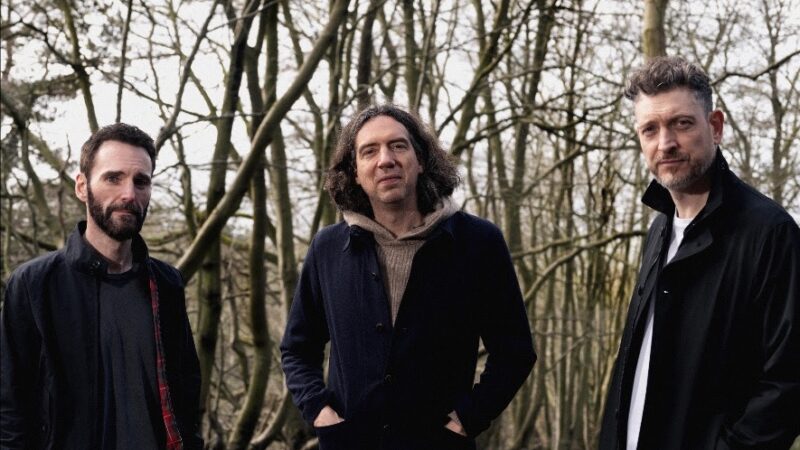
This weekend we enjoyed a new kind of live music experience: rediscovering the joy of listening to a childhood favourite by watching it through the eyes of the next generation – that was how we witnessed a fully-fledged arena return to Manchester for Snow Patrol at Co-op Live.
And it was special for lots of reasons.
Taking a little one to their first gig is something you’ll never forget and sharing a new-found connection with a band that you loved when you were their age is one of those magical things about music that we’re eternally grateful for.
You might assume the Snow Patrol crowd one skews a little older for the most part but we were pleased to see there were more than a few kids and teenagers donning tour tees, looking wide-eyed at the sheer size of the Co-op Live arena, and singing the words back better than Gary Lightbody at times.
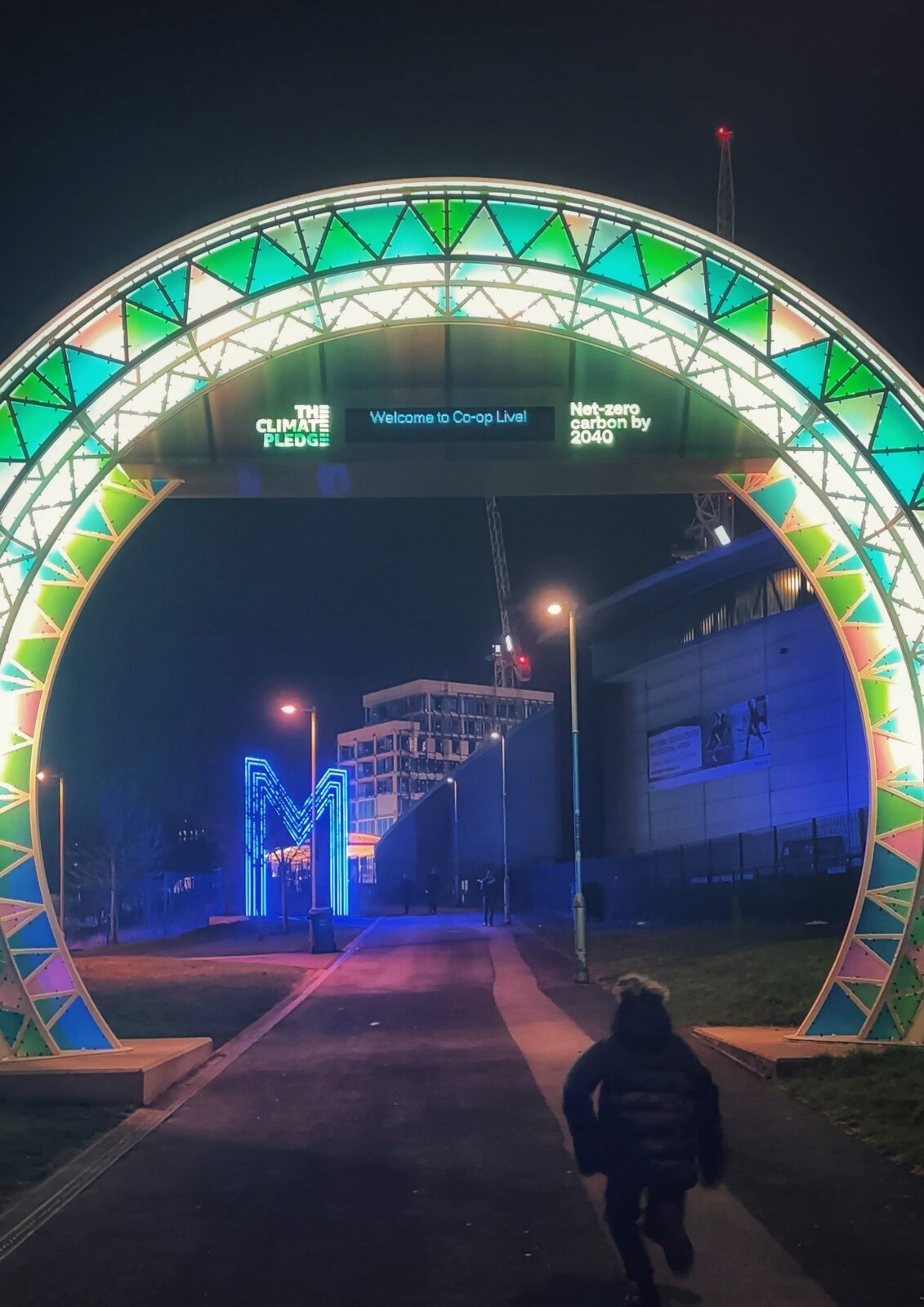
Sees the sign: ‘Race you there!’ (Credit: Audio North)
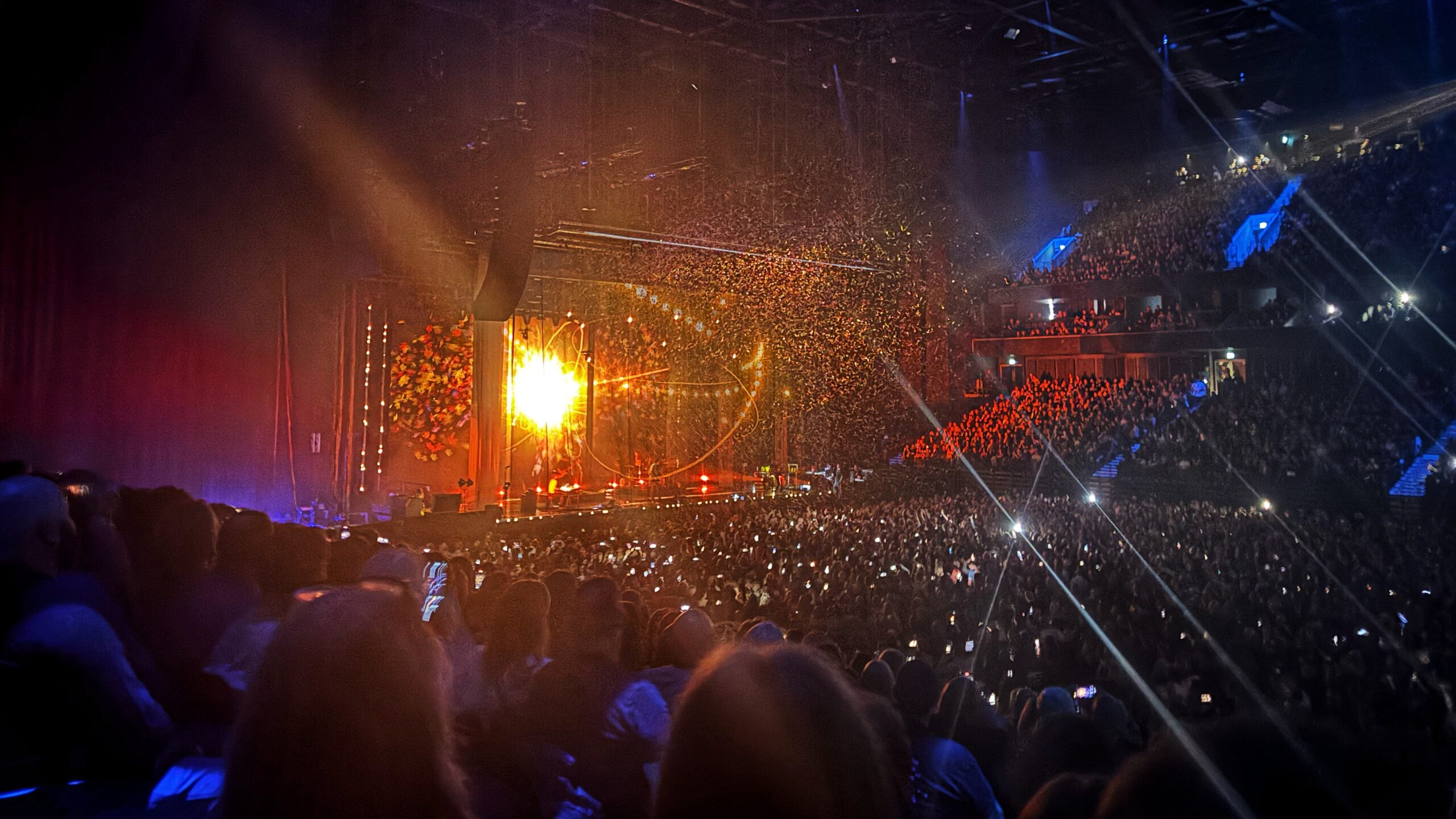
Yes, the Belfast-born frontman made a few mistakes on the night, but it did add a rather laid-back quality to what many acts might have found a daunting performance: playing a sell-out night to around 23,500 fans inside the enormous state-of-the-art venue.
But, obviously, there wasn’t even a whiff of nerves from these lads.
You don’t get to have been around for this long and become as successful as they are without being able to relax on stage and lean into those idiosyncratic perfections that feel more like private moments shared between the artist and the crowd.
The young lad sat watching it with us certainly got a kick out of it and though we might not have been able to cover his ears in time to censor some light but ever-charming swear words (it always sounds better in Irish, don’t you think?), it made for some nice banter between him and the crowd.
Big props must go to Johnny McDaid on the keys too, who besides having written for the likes of Ed Sheeran, Robbie Williams, Alicia Keys, Biffy Clyro and countless others over the years, also managed to impress by playing the majority of this entire tour after having trapped his hand in a train door. OUCH.
Credit: The Manc Group
Not only was that little interlude up there with one of the most applause-worthy parts of the entire show, but we were always pretty blown away by what we saw, as we all as what we heard.
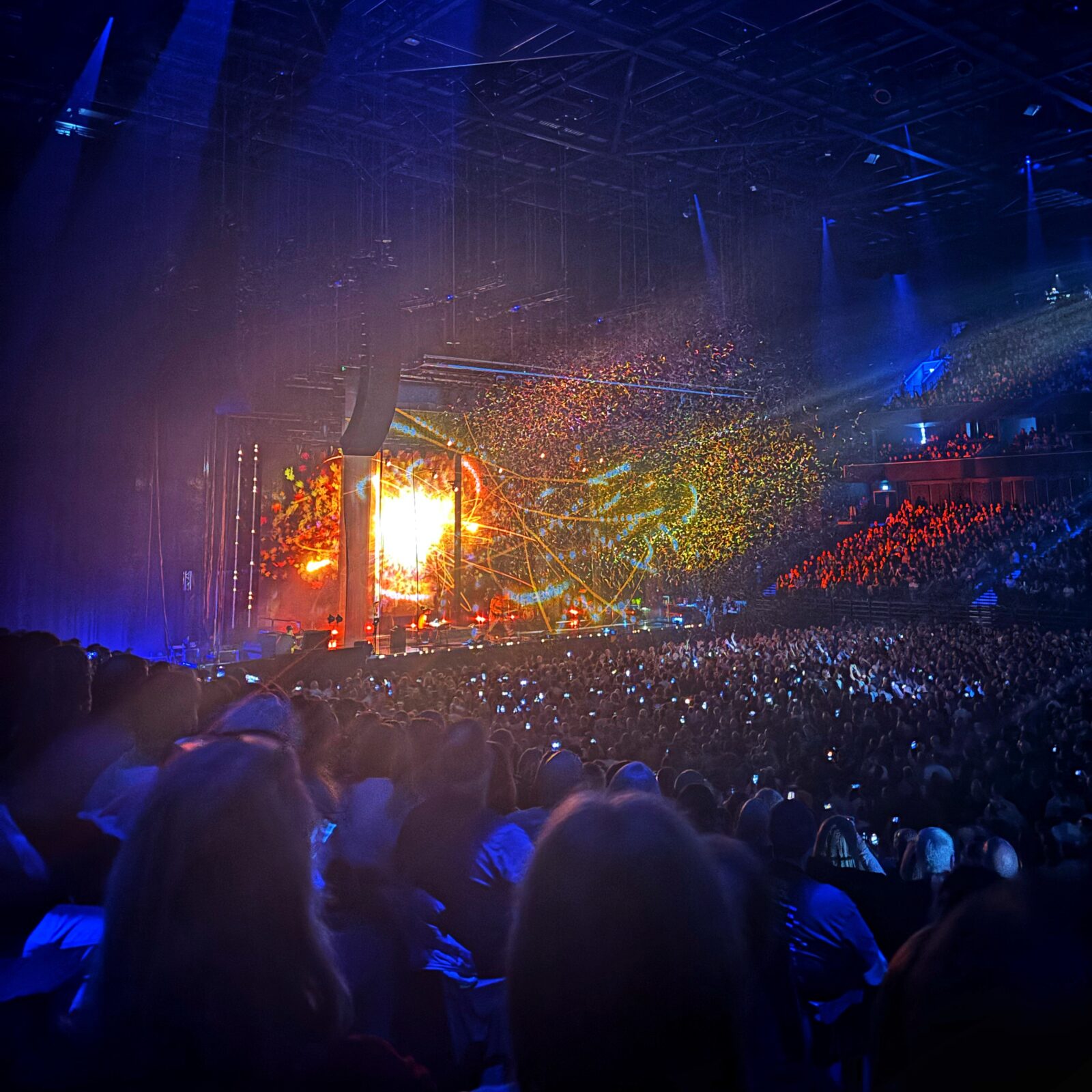
Be it watching a digital tree come to life, shed its leaves and then fall as petal confetti, two sheer semi-opaque paper-thin screens swirl to create the album cover art for their latest album, or kicking the gig off with ‘Take Back The City’ as a multicoloured skyline appeared behind them, it was all pretty incredible.
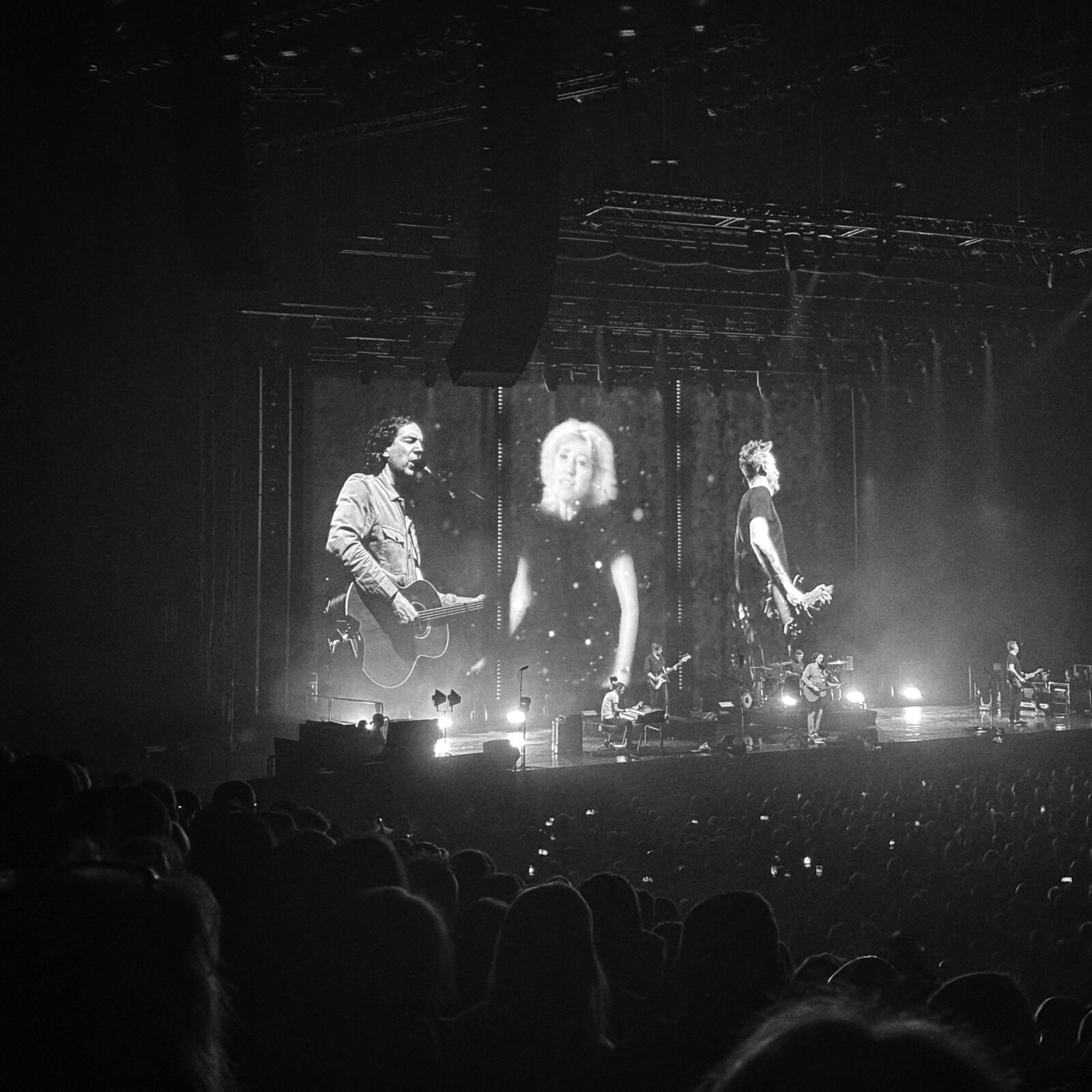
We even got to hear a personal favourite of ours, ‘Set Fire To The Third Bar’, complete with a virtual performance from the voice that truly makes the song: Martha Wainwright.
It was in moments like this when we turned to see a 10-year-old’s face not quite sure of what it was seeing but an open-mouthed expression confirming they were finding it as stunning as we were.
We thoroughly enjoyed going through the back catalogue and working our way right up to plenty of the songs from The Forest Is The Path – which Gary himself firmly believes is their best work yet when we interviewed him – but it was as visually stunning as it was to the gorgeous sonically.
Both proved to be a brilliant way to see the contemporary rock, indie and alternative veterans, but there’s something about giving them a stage as big as this that reminds you of just how much they deserve it.
Up there with one of the prettiest gig snapshots in our memory.Not quite a hologram but very cool nonetheless.The production levels are always top-tier at Co-op Live but the Snow Patrol set was much more impressive than we expected.
Last but not least, thanks to Co-op Live not just for having but for creating a little boy’s memory that he’ll never forget.
Flashbacks: The timelapse of the Trafford Centre construction that’s gone viral
Danny Jones
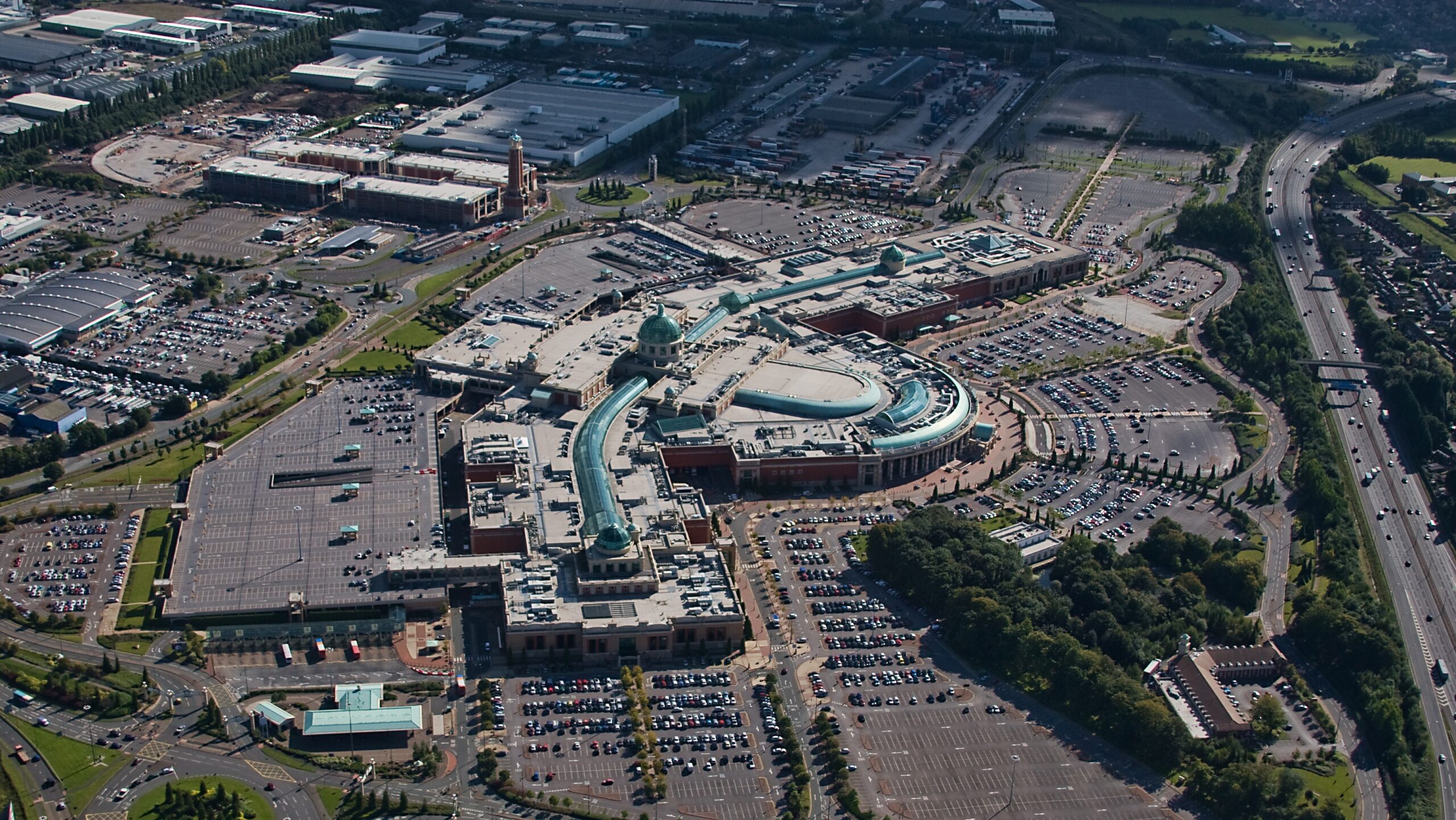
The Trafford Centre might look like some decadent Roman emperor’s palace or as if it was plucked from the heart of Ancient Grecian city, but as anyone old enough to remember it’s opening and/or construction will tell you, it seems strange to think its not even been around for three decades yet.
As Greater Manchester’s and one of the North West’s most famous shopping centres full stop, the iconic attraction first began being built back in 1996, when John Major was Prime Minister, Manchester United were still Premier League champions, Britpop was at its peak and George Michael was number one.
It’s fair to say that a lot has changed since then and although Oasis might be back come 2025, The Trafford Centre and surrounding area are pretty unrecgonisable compared to nearly 30 years ago.
All told, it took approximately 27 months to erect the neo-classical epicentre of all things shopping, leisure, food and fanciness – and here’s what the process looked like:
With the initial 14 million sq ft shopping centre being completed in September 1998 following approximately 810 days of work, The Trafford Centre debuted to the Manc public and beyond.
It took more than 3,000 builders to bring the 60 hectare site to life at the peak of construction and since then the plot has only grown bigger, bolder and more ambitious over time.
Present day, it has everything from cinema screens and a mini Legoland to a Sea Life location, multiple bowling alleys and countless other forms of entertainment beyond just rows of shops and restaurants – hence why it remains busy pretty much year-round.
Back then, British celebrities, popular local names of note, politicians, dignitaries and prominent figures from the retail industry got to visit as part of exclusive preview events in the days before its launch date.
You can see the spectacle and fascination surrounding the official opening event here:
Seems surreal watching this today but the construction of the Trafford Centre was a huge moment not just for 0161 but all of the North.
But of course, the entire complex itself has seen multiple extensions over the years, including massive developments such as Barton Square and The Great Hall.
At the outset, it cost more than £600 million to build The Trafford Centre; the major renovations mentioned above which took place in 2008 cost another £100m and the Trafford Palazzo revamp around a decade later came in at around £75m.
There has and always will be lots of money put behind this intruguing monument to modern consumerism, and big brands will continue to flock to open units within the huge expanse whenever they can: some of the most recent being Archie’s, Flying Tiger, Sephora, Tiffany, Gymshark and more.
We’ll admit the aesthetic still makes us double-take from time to time (though not as much as confused Londoners visiting for the first time), but it’s not like this part of the world hasn’t boasted plenty of other curiosities in the past…

 The Manc -
1st March 2021
The Manc -
1st March 2021