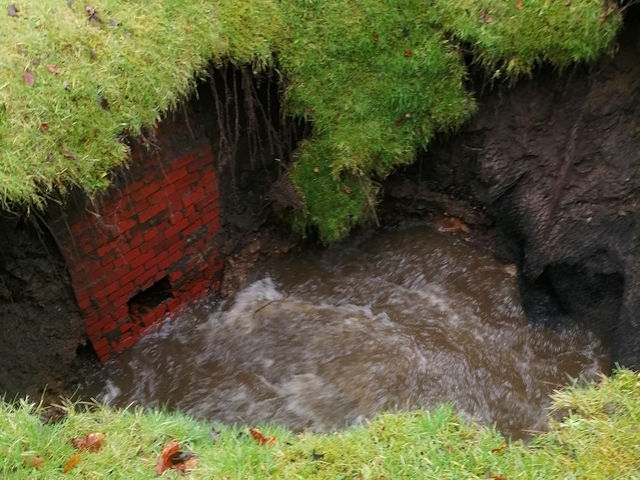
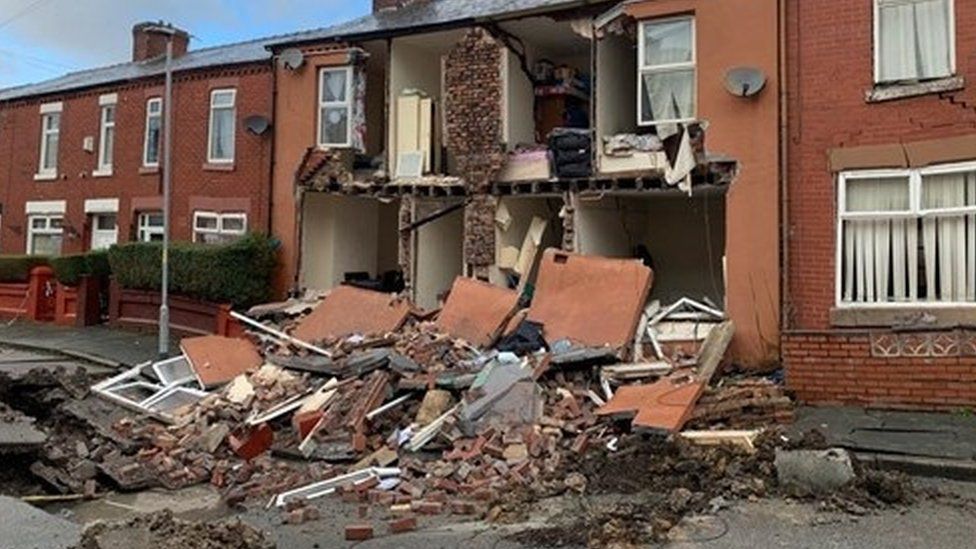
It also brought with it dramatic scenes of a sinkhole opening up – which even “swallowed” a car – on Wednesday evening on a residential street in the Abbey Hey area of Gorton, that even shockingly led to the collapse of the frontage of at least two terraced properties as a result.
But as many will know, this is far from the first time sinkholes have caused drama in the region as of late.
In 2016 alone – the year that will be remembered by Mancunians for Brexit, the electing of Donald Trump, and of course, sinkholes – at least six major sinkholes opened up across Greater Manchester.
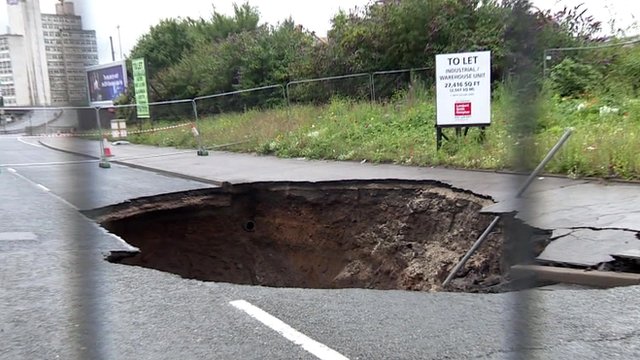
The Mancunian Way sinkhole – which was caused by a collapsed water culvert destroying a main sewer, and quickly became a tourist attraction until it was finally fixed and reopened on 16th June – grabbed most of the headlines, but there was also a 10ft deep, 2ft wide sinkhole that appeared on Tib Street in the Northern Quarter in April, the collapse of an old brick sewer that opened one in Whitefield on 12th September, a super storm caused traffic chaos in Cheetham Hill as a crater closed Waterloo Road two days later, and several other notable instances that can all be referenced from that same year.
But now that we’ve actually highlighted the sheer scale of the problem, what actually is a sinkhole? What makes them occur? And just why do we seem to be so plagued with them here in Greater Manchester?
We had a dig around to get to the bottom of this – and this is what we found.
Amanda Webster
What are sinkholes?
If we’re going to get technical with it, the Oxford English Dictionary defines a sinkhole as: “a cavity in the ground, especially in a limestone formation, caused by water erosion and providing a route for surface water to disappear underground”, but in a nutshell, a sinkhole is essentially any hole in the ground created by erosion and the drainage of water.
Sinkholes can either be just a few feet across, or in the case of the aforementioned instances in Gorton earlier this week, large enough to swallow whole vehicles and whole buildings.
Although they’re more often than not the result of natural processes, they can also be triggered by human activity too.
Are there different types of sinkhole?
The short answer is yes – there are two basic types of sinkhole.
There’s those that are created slowly over time, which are known as cover-subsidence sinkholes, and those that appear suddenly, which are known as a cover-collapse sinkhole, and as you’d expect, it’s the latter type that creates the sort of headlines we’ve seen this week and in recent years, but both varieties are formed by the same basic mechanism.
Why do they occur?
Now, this is where the real geological explanations have to come into it.
Sinkholes mainly occur in what is known as ‘karst terrain’ – areas of land where soluble bedrock, such as limestone or gypsum, can be dissolved by water.
With cover-subsidence sinkholes, the bedrock becomes exposed and is gradually worn down over time, with the holes often becoming ponds as the water fills them in, but with a cover-collapse sinkhole, this same process occurs out of our sight.
With cover-collapse sinkholes, naturally-occurring cracks and small voids underneath the surface are hollowed out by water erosion, with a cover of soil or sediment remaining over the top, and eventually, as the hole expands over time, this cover can no longer support its own weight and suddenly collapses to reveal the cavern that’s been hiding underneath.
BBC
Pothole vs Sinkhole
There are a number of differences between a pothole and a sinkhole, that aren’t just the size of the hole and the drama that goes along with it.
It was revealed earlier this month, thanks to a recent study by Manchester-based personal injury lawyers JMW Solicitors and data from fixmystreet.com, that as of January 2021, there were 7,114 reported open pothole cases reported across Greater Manchester – a whopping 2,356 of those being in the City of Manchester itself – with the situation only predicted to get worse, so it would seem that sinkholes aren’t the only recurring issue we have in the region.
But what is the difference between the two?
To keep it brief, and without repeating too much of what has already been explained, a sinkhole is a closed natural depression in the ground surface caused by removal of material below the ground, whereas a pothole is usually a fairly small feature caused by a failure of paving materials.
Potholes are known to become more abundant in late winter and spring due to freeze-thaw damage.
Why do we get so many sinkholes in Greater Manchester?
And now we’ve come down to the crux of it.
What is it about the region of Greater Manchester that seems to be revealing so many dangerous and damaging sinkholes in comparison to others? Well, according to Dr Domenico Lombardi – a lecturer in Geotechnical Engineering at the University of Manchester, who gave his two cents on the topic after the year of sinkhole mayhem that was 2016 – our sinkholes are not a natural phenomenon as much as they are man made.
It’s all about the number of old mines, sewers, a growing population and ongoing building works that we have going on in the region – and of course, increasing rainfall.
We know by now that sinkholes occur when underground cavities collapse, causing the failure of the ground above, but in Greater Manchester, our geology is mainly sand and sandstone – which are hardly soluble – so Dr Lombardi says we need to look to old mines and collieries, which are eroded during heavy rainfall or when there is a leaking water main or sewer pipe.
In these cases an underground cavity can form super quick, and the collapse can happen in a matter of hours – as was reported by United Utilities to the case in Abbey Hey yesterday.
Dr Lombardi said: “In recent years, an increasing number of sinkholes have been observed in Greater Manchester and in other regions of the United Kingdom. Arguably, this can be attributed to the increasing number of extreme rainfall events… flooding and an ageing utility infrastructure.”
The solution?
Dr Lombardi recommends timely repairs and maintenance of piping, and a more sustainable drainage system, with more urban green areas too.
Greater Manchester Fire & Rescue Service
It’s hard to decipher for sure at this point whether the necessary action is being undertaken to prevent more dangerous and damaging sinkholes from opening up across the region – especially as the number of freak weather occurrences are becoming harder to predict – but with work now officially being underway on Manchester’s first city centre park in 100 years, and the City of Trees initiative – which will see three million trees planted across Greater Manchester as part of The Northern Forest – starting to take shape, there’s no denying that positive ground is being made.
Time will surely tell.
Feature
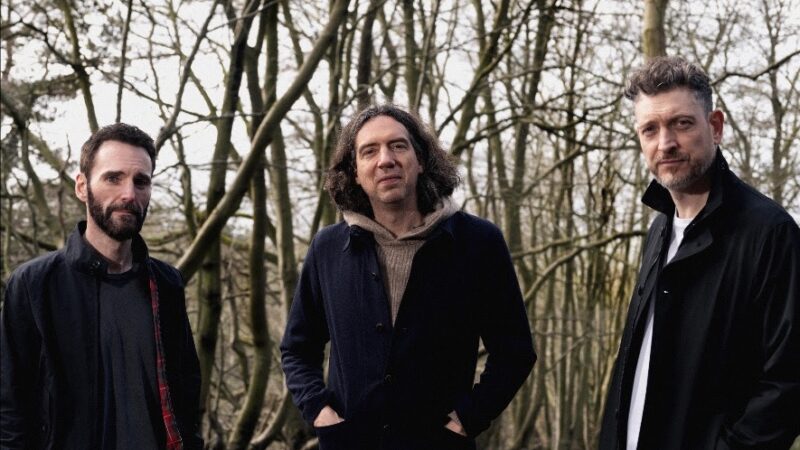
Review | Snow Patrol roll back the years at Co-op Live for a mini-Manc’s first gig
Danny Jones
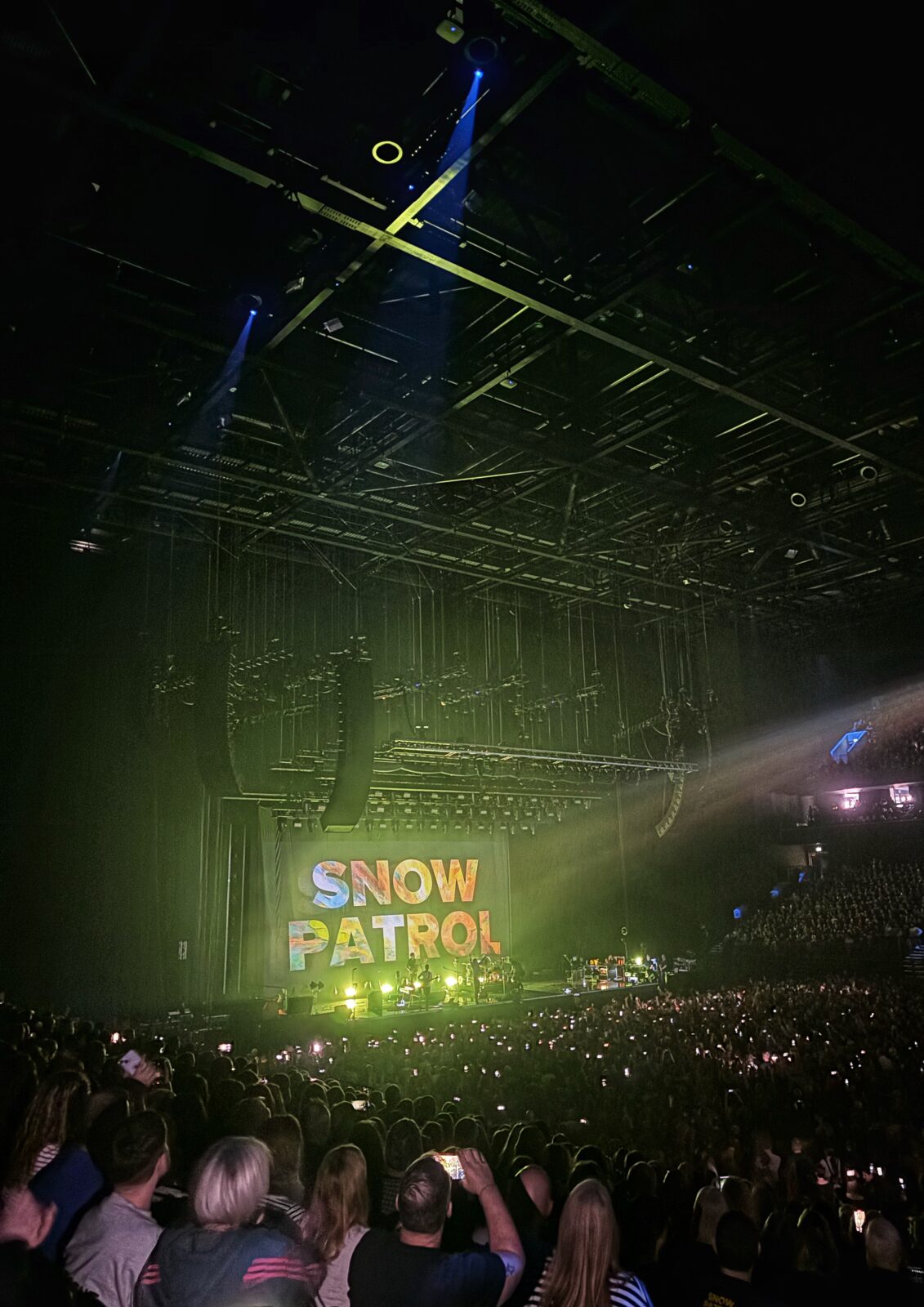
This weekend we enjoyed a new kind of live music experience: rediscovering the joy of listening to a childhood favourite by watching it through the eyes of the next generation – that was how we witnessed a fully-fledged arena return to Manchester for Snow Patrol at Co-op Live.
And it was special for lots of reasons.
Taking a little one to their first gig is something you’ll never forget and sharing a new-found connection with a band that you loved when you were their age is one of those magical things about music that we’re eternally grateful for.
You might assume the Snow Patrol crowd one skews a little older for the most part but we were pleased to see there were more than a few kids and teenagers donning tour tees, looking wide-eyed at the sheer size of the Co-op Live arena, and singing the words back better than Gary Lightbody at times.
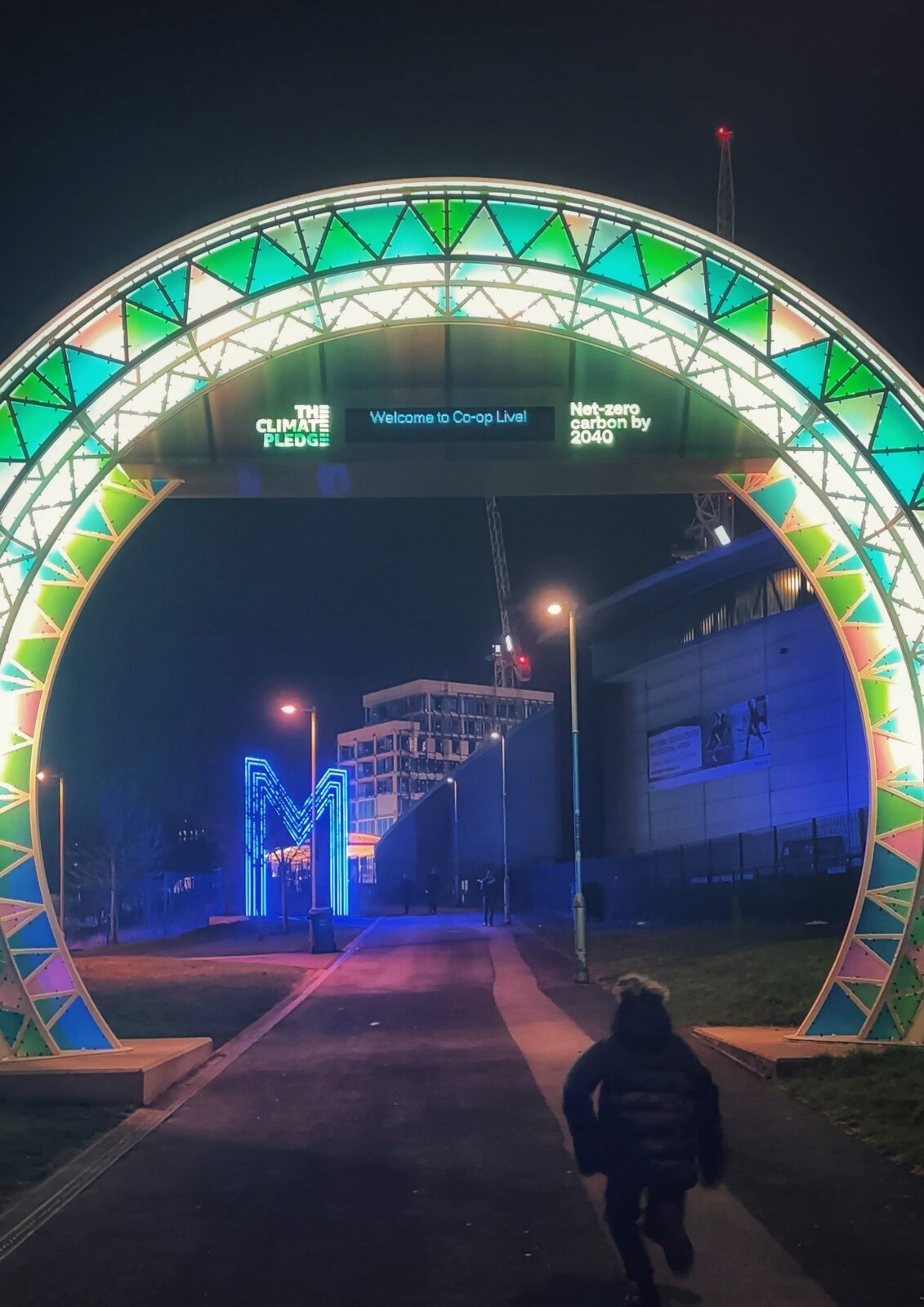
Sees the sign: ‘Race you there!’ (Credit: Audio North)
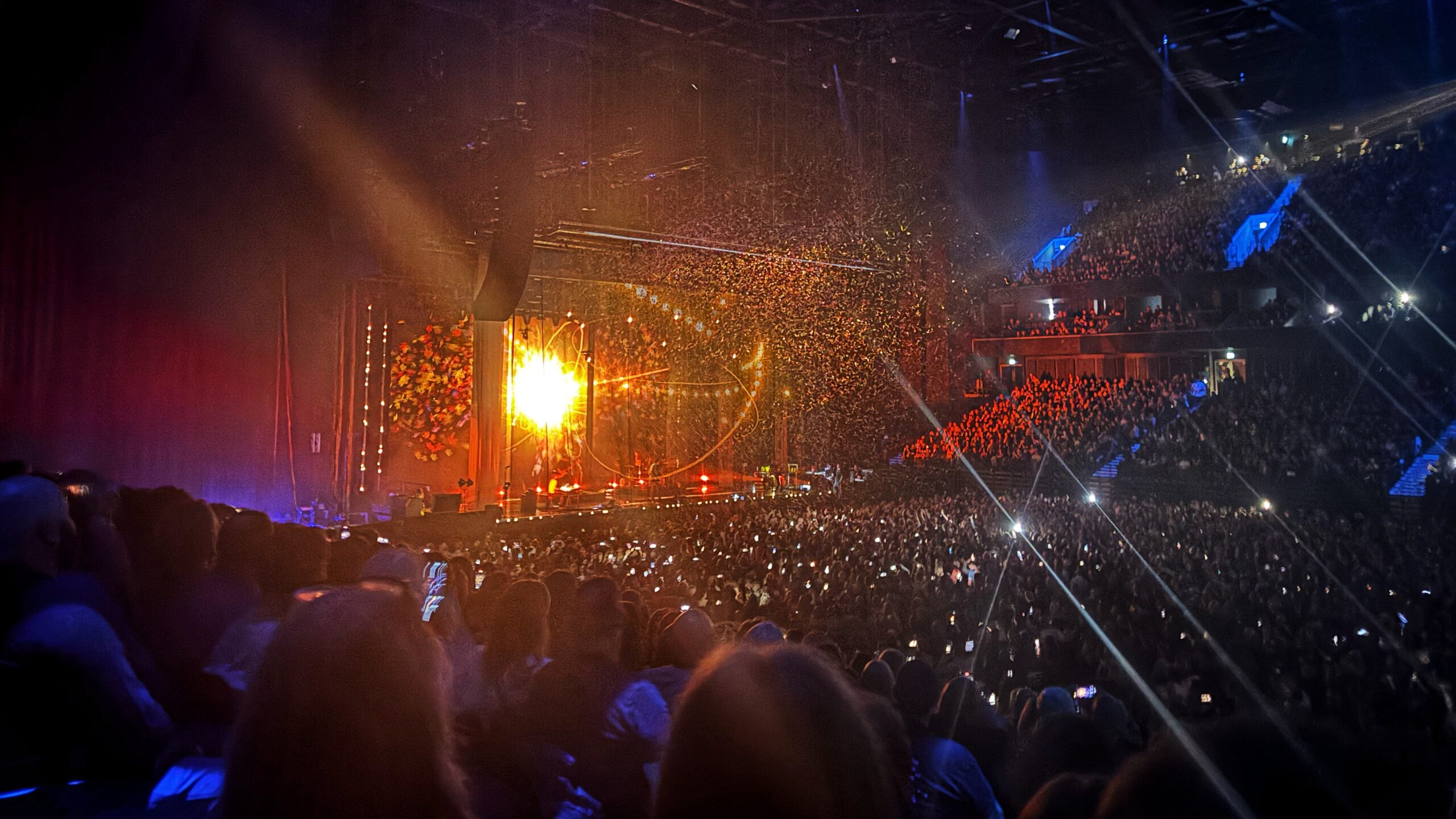
Yes, the Belfast-born frontman made a few mistakes on the night, but it did add a rather laid-back quality to what many acts might have found a daunting performance: playing a sell-out night to around 23,500 fans inside the enormous state-of-the-art venue.
But, obviously, there wasn’t even a whiff of nerves from these lads.
You don’t get to have been around for this long and become as successful as they are without being able to relax on stage and lean into those idiosyncratic perfections that feel more like private moments shared between the artist and the crowd.
The young lad sat watching it with us certainly got a kick out of it and though we might not have been able to cover his ears in time to censor some light but ever-charming swear words (it always sounds better in Irish, don’t you think?), it made for some nice banter between him and the crowd.
Big props must go to Johnny McDaid on the keys too, who besides having written for the likes of Ed Sheeran, Robbie Williams, Alicia Keys, Biffy Clyro and countless others over the years, also managed to impress by playing the majority of this entire tour after having trapped his hand in a train door. OUCH.
Credit: The Manc Group
Not only was that little interlude up there with one of the most applause-worthy parts of the entire show, but we were always pretty blown away by what we saw, as we all as what we heard.
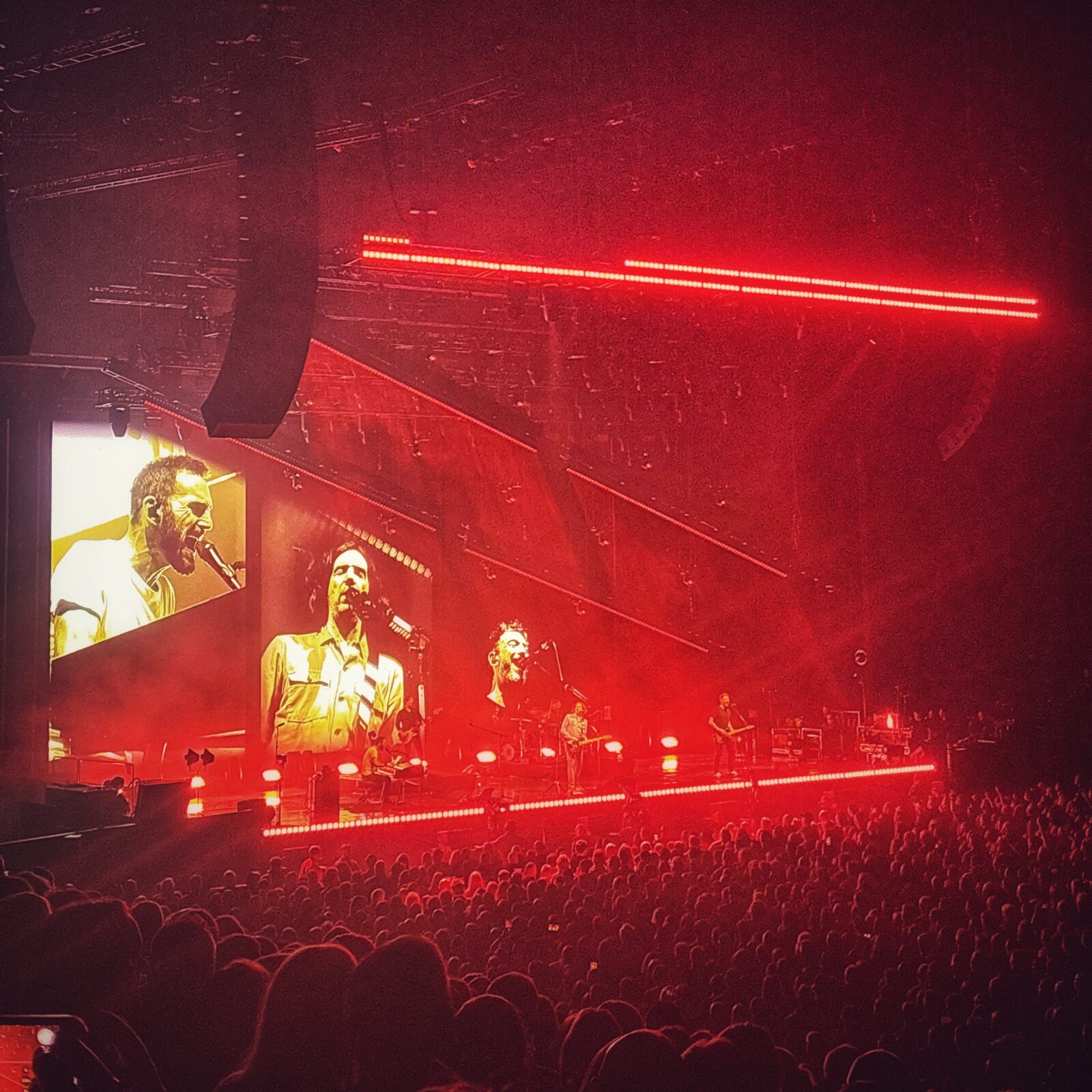
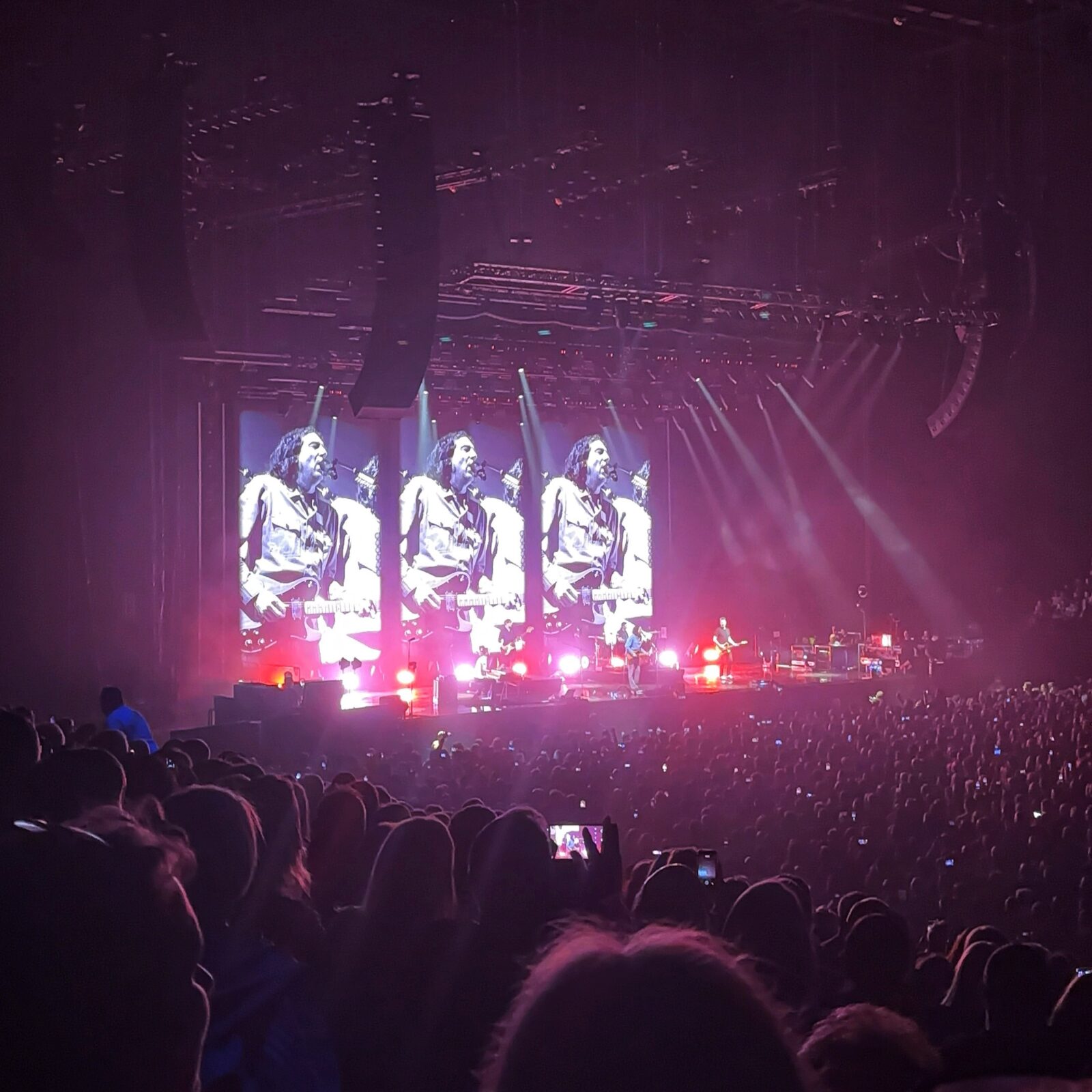
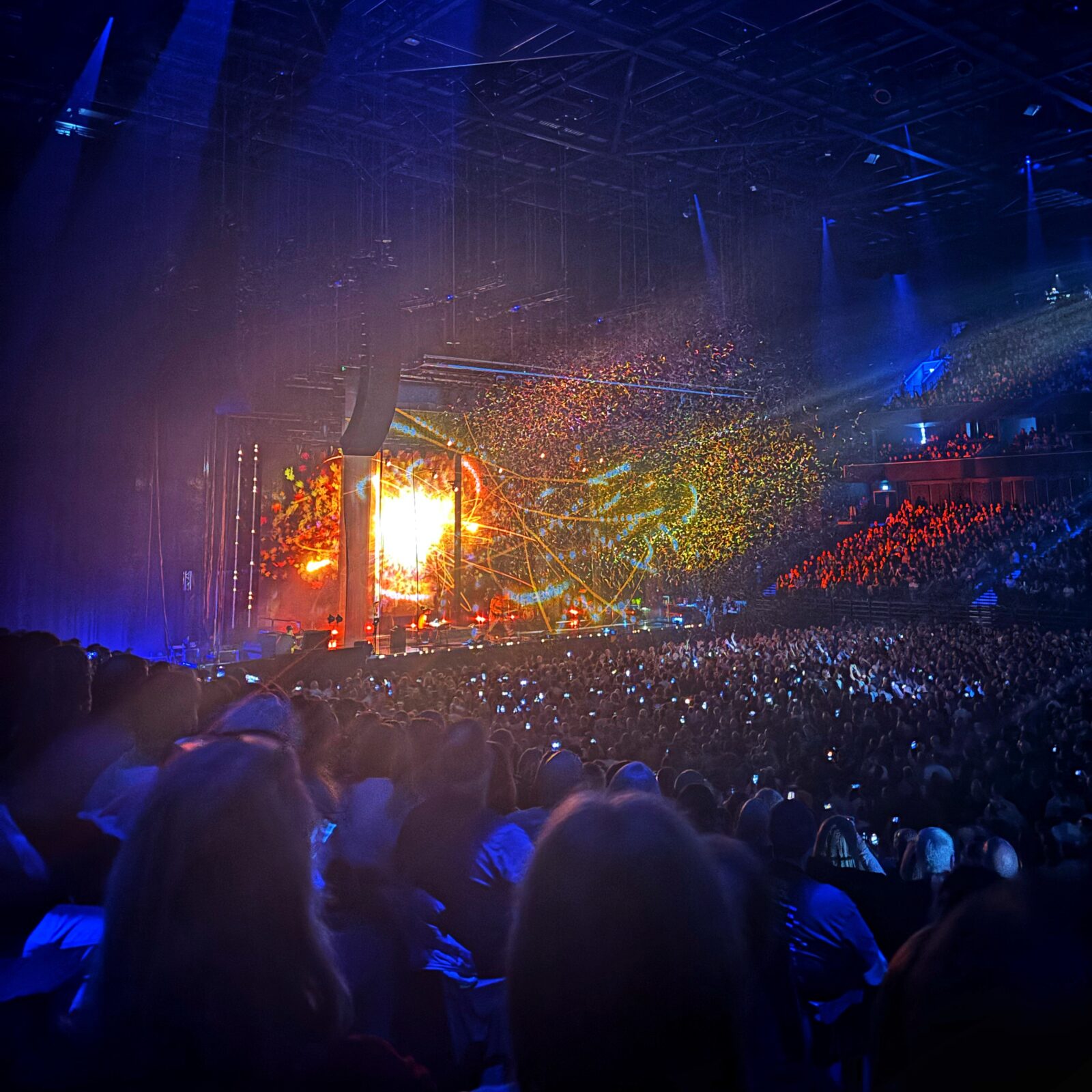
Be it watching a digital tree come to life, shed its leaves and then fall as petal confetti, two sheer semi-opaque paper-thin screens swirl to create the album cover art for their latest album, or kicking the gig off with ‘Take Back The City’ as a multicoloured skyline appeared behind them, it was all pretty incredible.
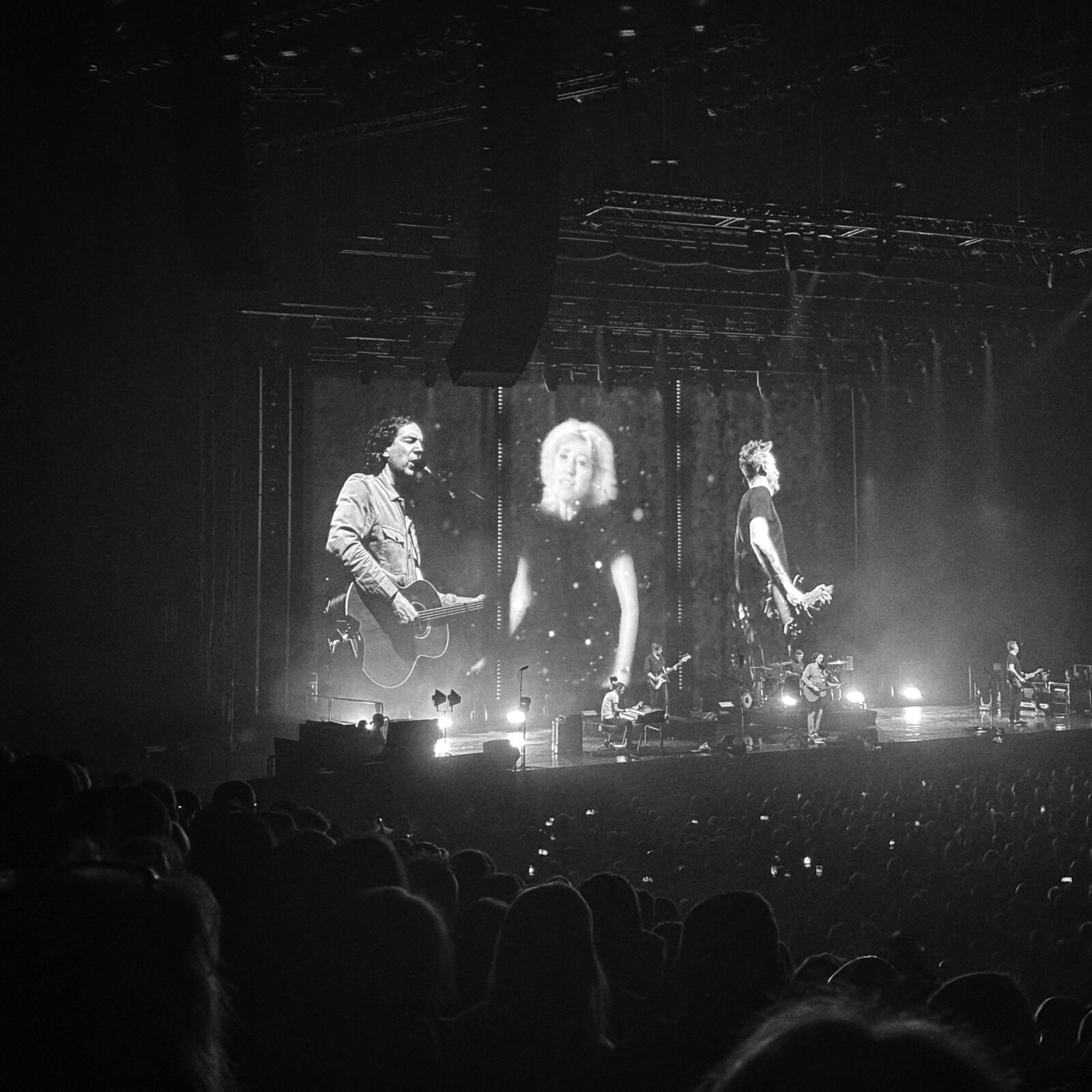
We even got to hear a personal favourite of ours, ‘Set Fire To The Third Bar’, complete with a virtual performance from the voice that truly makes the song: Martha Wainwright.
It was in moments like this when we turned to see a 10-year-old’s face not quite sure of what it was seeing but an open-mouthed expression confirming they were finding it as stunning as we were.
We thoroughly enjoyed going through the back catalogue and working our way right up to plenty of the songs from The Forest Is The Path – which Gary himself firmly believes is their best work yet when we interviewed him – but it was as visually stunning as it was to the gorgeous sonically.
Both proved to be a brilliant way to see the contemporary rock, indie and alternative veterans, but there’s something about giving them a stage as big as this that reminds you of just how much they deserve it.
Up there with one of the prettiest gig snapshots in our memory.Not quite a hologram but very cool nonetheless.The production levels are always top-tier at Co-op Live but the Snow Patrol set was much more impressive than we expected.
Last but not least, thanks to Co-op Live not just for having but for creating a little boy’s memory that he’ll never forget.
Flashbacks: The timelapse of the Trafford Centre construction that’s gone viral
Danny Jones
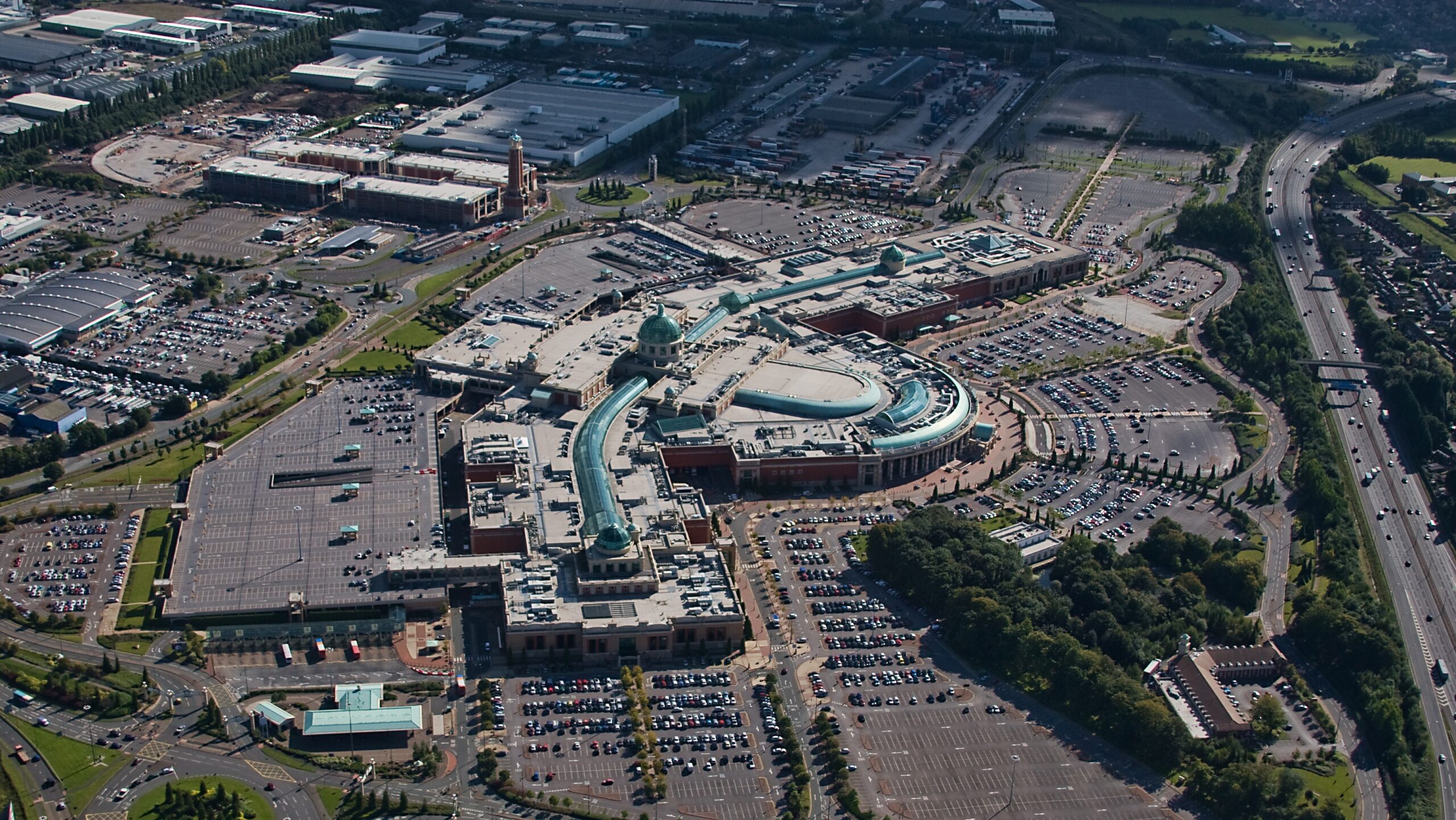
The Trafford Centre might look like some decadent Roman emperor’s palace or as if it was plucked from the heart of Ancient Grecian city, but as anyone old enough to remember it’s opening and/or construction will tell you, it seems strange to think its not even been around for three decades yet.
As Greater Manchester’s and one of the North West’s most famous shopping centres full stop, the iconic attraction first began being built back in 1996, when John Major was Prime Minister, Manchester United were still Premier League champions, Britpop was at its peak and George Michael was number one.
It’s fair to say that a lot has changed since then and although Oasis might be back come 2025, The Trafford Centre and surrounding area are pretty unrecgonisable compared to nearly 30 years ago.
All told, it took approximately 27 months to erect the neo-classical epicentre of all things shopping, leisure, food and fanciness – and here’s what the process looked like:
With the initial 14 million sq ft shopping centre being completed in September 1998 following approximately 810 days of work, The Trafford Centre debuted to the Manc public and beyond.
It took more than 3,000 builders to bring the 60 hectare site to life at the peak of construction and since then the plot has only grown bigger, bolder and more ambitious over time.
Present day, it has everything from cinema screens and a mini Legoland to a Sea Life location, multiple bowling alleys and countless other forms of entertainment beyond just rows of shops and restaurants – hence why it remains busy pretty much year-round.
Back then, British celebrities, popular local names of note, politicians, dignitaries and prominent figures from the retail industry got to visit as part of exclusive preview events in the days before its launch date.
You can see the spectacle and fascination surrounding the official opening event here:
Seems surreal watching this today but the construction of the Trafford Centre was a huge moment not just for 0161 but all of the North.
But of course, the entire complex itself has seen multiple extensions over the years, including massive developments such as Barton Square and The Great Hall.
At the outset, it cost more than £600 million to build The Trafford Centre; the major renovations mentioned above which took place in 2008 cost another £100m and the Trafford Palazzo revamp around a decade later came in at around £75m.
There has and always will be lots of money put behind this intruguing monument to modern consumerism, and big brands will continue to flock to open units within the huge expanse whenever they can: some of the most recent being Archie’s, Flying Tiger, Sephora, Tiffany, Gymshark and more.
We’ll admit the aesthetic still makes us double-take from time to time (though not as much as confused Londoners visiting for the first time), but it’s not like this part of the world hasn’t boasted plenty of other curiosities in the past…

 Emily Sergeant -
22nd January 2021
Emily Sergeant -
22nd January 2021