We all know that Manchester and bees go hand in hand.
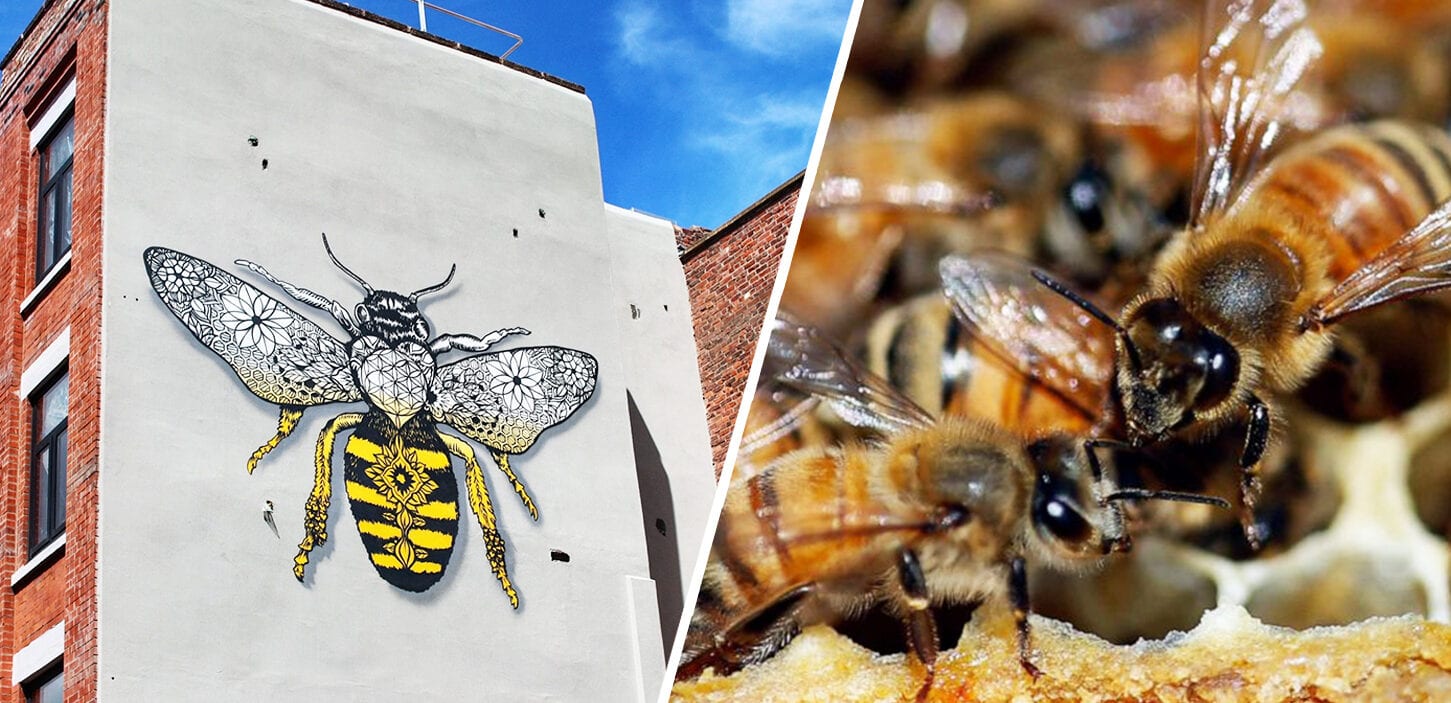
Bees have been an emblem for our city for over 150 years, so it’s fair to say that we’re quite-rightly proud of our links to this hard-working insect.
It all started in 1842 when, as part of a traditional Victorian branding exercise, the early city fathers had to decide on a coat of arms that would tell the world who Manchester was, so they settled upon including a globe with seven worker bees in to show how hard Mancunians worked, and then traded it across the seven seas.
The Manchester bee was born of industry, and the city’s people have fought to make this place thrive.
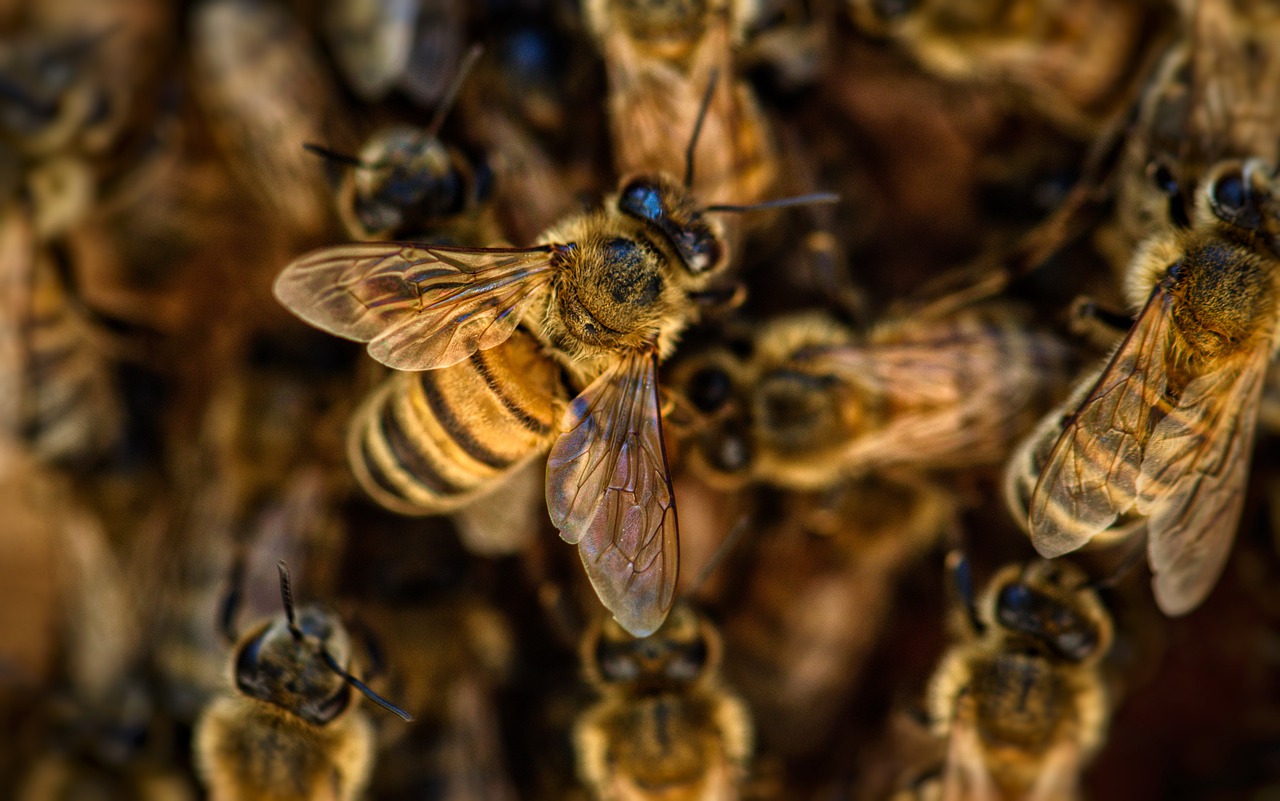
While there is said to be over 250 species of ‘solitary bee’ buzzing around in Britain, Manchester’s worker bee reflects the city as a hive of activity, and represents a sense of unity at times when it’s needed most.
Mancunians are pretty fond of our bees, which is why when it was announced last month that the UK government had bowed to pressure from the National Farmers Union and agreed to authorise the use of the highly-damaging neonicotinoid thiamethoxam – also known as bee-killing pesticides – for the treatment of sugar beet seed in 2021, it got many up in arms.
Prior to this decision, bee-killing neonicotinoids had been banned across Europe since 2013.
Environment Secretary George Eustice made the decision to authorise the use of the neonicotinoids in response to the potential danger posed from beet yellows virus, but this was despite a similar application being refused in 2018 by the UK Expert Committee on Pesticides due to “unacceptable environmental risks”.
In 2018, the UK government supported restrictions on the neonicotinoid pesticides across the European Union, due to the very clear harm that they were causing to bees and other wildlife, with the then-Environment Secretary, Michael Gove, promising that the government would maintain these restrictions, unless the scientific evidence changed.
But the evidence has not changed, and this has lead to many campaigners speaking up and taking action.
The Wildlife Trusts have spoken out against the approval, saying: “The devastating impact this group of pesticides is having on our wildlife has increased, and hardly a month goes by without yet more evidence of the wider ecological crisis”.
Joan Edwards – Director of Public Affairs at The Wildlife Trusts – also personally added that: “The Secretary of State’s decision to authorise the use of an environmentally devastating chemical to increase production of a crop with no nutritional value is madness… [and] the UK Government cannot claim to be a ‘world-leader’ on protecting and restoring nature, whilst supporting the use of these damaging pesticides.”
Academic and author, Professor Dave Goulson, has warned that one teaspoon of neonic is enough to kill 1.25 billion honeybees, which is equivalent to four lorryloads.
And Greenpeace UK has branded the decision as “posing a lethal threat to bee populations”.
The latter of the those parties has taken it once step further though – and this is where Mancunians can step in to help save the insects that mean so much to our city.
The UK arm of global non-governmental environmental organisation Greenpeace – who’s aim is to “defend the natural world, and stand for a green and peaceful future” – has launched a petition to urge Environment Secretary George Eustice to reverse this decision.
The government has given the green light for bee-killing pesticides to be used in the UK.
George Eustice has the power to change all of this.
The petition description reads: “Bees are essential for our survival.
“They pollinate much of what we eat and play a critical role in sustaining ecosystems around the world, but the last decade has been devastating for insect populations, and bees have been hit hard – with populations shrinking by a third in the UK.
“Bee-killing neonicotinoids have been banned across Europe since 2013, but the UK government has just approved these deadly chemicals for emergency use, posing a lethal threat to bee populations.”
It continues: “George Eustice has the power to change all of this.”
“As Environment Minister, he can show he’s on the side of nature by enforcing a total ban on bee-harming pesticides. He’s approved this emergency use of a deadly pesticide, but we need to remind him that we’re in the middle of a climate and nature emergency [so] if lots of people sign this petition, we can pile pressure on the government to quickly reverse its decision and keep bee-killing pesticides away from our environment”.
The organisation is fighting to “enforce a total ban on bee-killing pesticides”, and is therefore encouraging both Mancunians and people all across the UK to “get the Environment Minister to act fast” with their signatures.
Pep Guardiola hints at when Manchester City fans can expect to see their latest arrival
Danny Jones
Manchester City manager Pep Guardiola has given supporters a rough timeline as to when they can expect to see their new signing, or at least their latest arrival, make his first appearance.
The Blues wrapped up the January transfer window with four major signings: their new attacking number seven, Omar Marmoush (who has already bagged a hattrick on his home debut) promising defensive duo, Abdukodir Khusanov and Brazilian Vitor Reis, as well as their ‘mini-Rodri’, Nico Gonzalez.
However, the club has had another late arrival who was technically signed back at the start of last year but who has spent for the last 12 months or so loaned back to his previous parent club, River Plate in Argentina, waiting to make the move over to the Etihad Stadium – and now he’s here in Manchester.
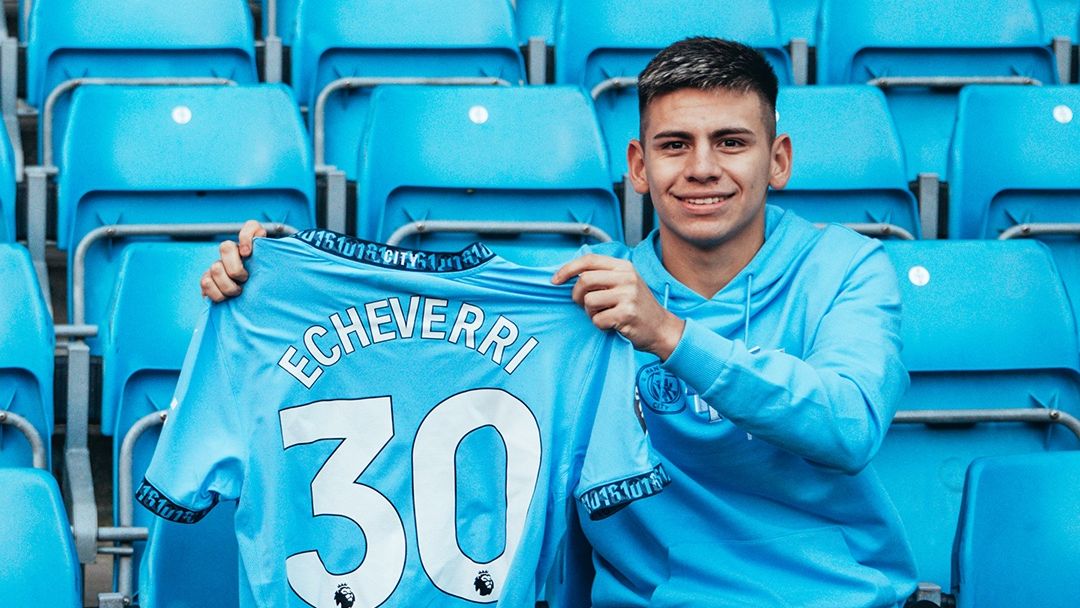
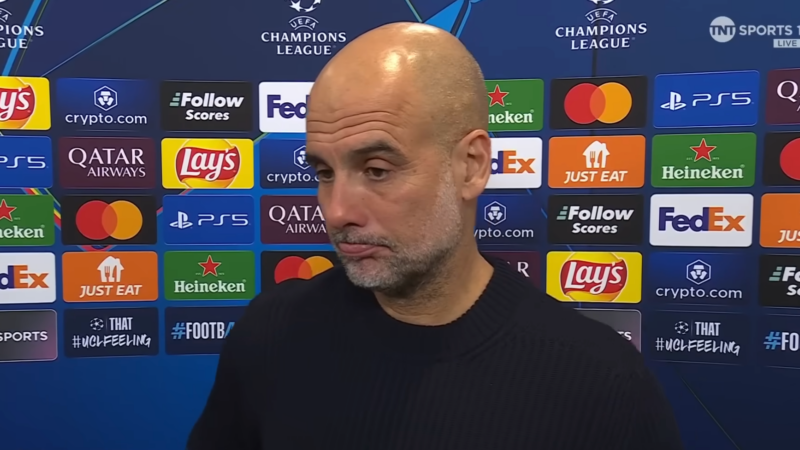
Speaking on his touchdown in 0161, Pep said Claudio Echeverri won’t be thrown into first-team action straight away but did give a rough estimate as to when City fans could expect him to get involved. You can see him discussing the integration plan in his post-match press conference following the Spurs win.
The mention was only brief but there’s still plenty of reason for Man City fans to be excited by the late January signing.
“Yeah, he [Claudio Echeverri] is going to start to train and mainly will be for the end of the season, maybe the [Club] World Cup and as soon as possible [that] he arrives he can adapt quick for the future.”
As mentioned, the 19-year-old Argentinian attacking midfielder from Resistencia officially put pen to paper with CFG back in January 2024 and was quickly dubbed ‘the next Messi’.
Now, although the football world is often quick to jump the gun with these things and he isn’t the first and certainly won’t be last to be slapped with this premature title, he’s done more to back up these claims since then than he has rubbish them.
Starring at the 2025 Under-20 South American Championships, netting six goals in nine games to finish the tournament as the second highest scorer thanks to notable braces against Brazil and Uruguay as the young Argentine’s finished as runners up.
He also notched 48 senior appearances for River Plate thus far, netting four goals and grabbing eight assists in that time, not to mention having already captained his national team at the 2023 Under 17s World Cup, where he scored another five.
Safe to say there’s plenty of talent to be tapped in this lad.
Once again, Echeverri won’t go straight into the senior set-up for a little while yet, barring a major injury crisis, but he’ll be a more than exciting addition to the City Football Academy and for future first-team lineups for years to come.
Who knows, maybe he’ll be included in an FA Cup matchday squad? Nevertheless, you can expect him to not just come of the bench but hopefully show what he can do at the Club World Cup this summer.
City‘s first fixture as reigning champions of the competition will be against Moroccan side Wydad AC on 18 June 2025.
You can watch Echeverri’s first full interview as a Man City player down below:
The new Man City signing is excited to be finally be part of the club 13 months on from agreeing his contract.
Rochdale has been named Greater Manchester’s ‘Town of Culture’ for 2025
Emily Sergeant
Rochdale has officially been named Greater Manchester’s Town of Culture for 2025.
Taking over the reins from Bolton – which held the title in 2024 – and following in the footsteps of Stockport before that, which held the title in 2023, and even hosted a massive ‘Town of Culture Weekender’ festival with 50+ free events to celebrate and bring its title year to a close, it’s now the turn of the north-eastern Greater Manchester borough of Rochdale.
Rochdale’s year will build on the town’s already-rich cultural history and international reputation as the home of the co-operative movement.
More than 35 arts organisations will be bringing together an ambitious programme of festivals, exhibitions, events, and performances throughout the year.
Unfamiliar with what the ‘Greater Manchester Town of Culture’ title is all about? It’s an accolade that’s handed out every year to different boroughs across the region.
Bury was the inaugural title-holder 2020 and held onto it in 2021 too due to the COVID pandemic, before being followed by Stalybridge in 2022, Stockport in 2023, and of course, Bolton in the year just gone.
The title celebrates Greater Manchester’s culture and heritage.
As well as getting a new title to shout about, it also sees the towns given a grant from the Greater Manchester Combined Authority (GMCA) culture fund to help develop a programme of cultural events and activities throughout the year.
Rochdale has been named Greater Manchester’s ‘Town of Culture’ for 2025 / Credit: The Manc Group | Rochdale Council
In Rochdale’s case, you can expect the ‘very best local talent’, as this year is promising to put ‘people power’ centre stage, with residents helping to plan, develop, and deliver a lineup of creative activities, alongside a number of major events.
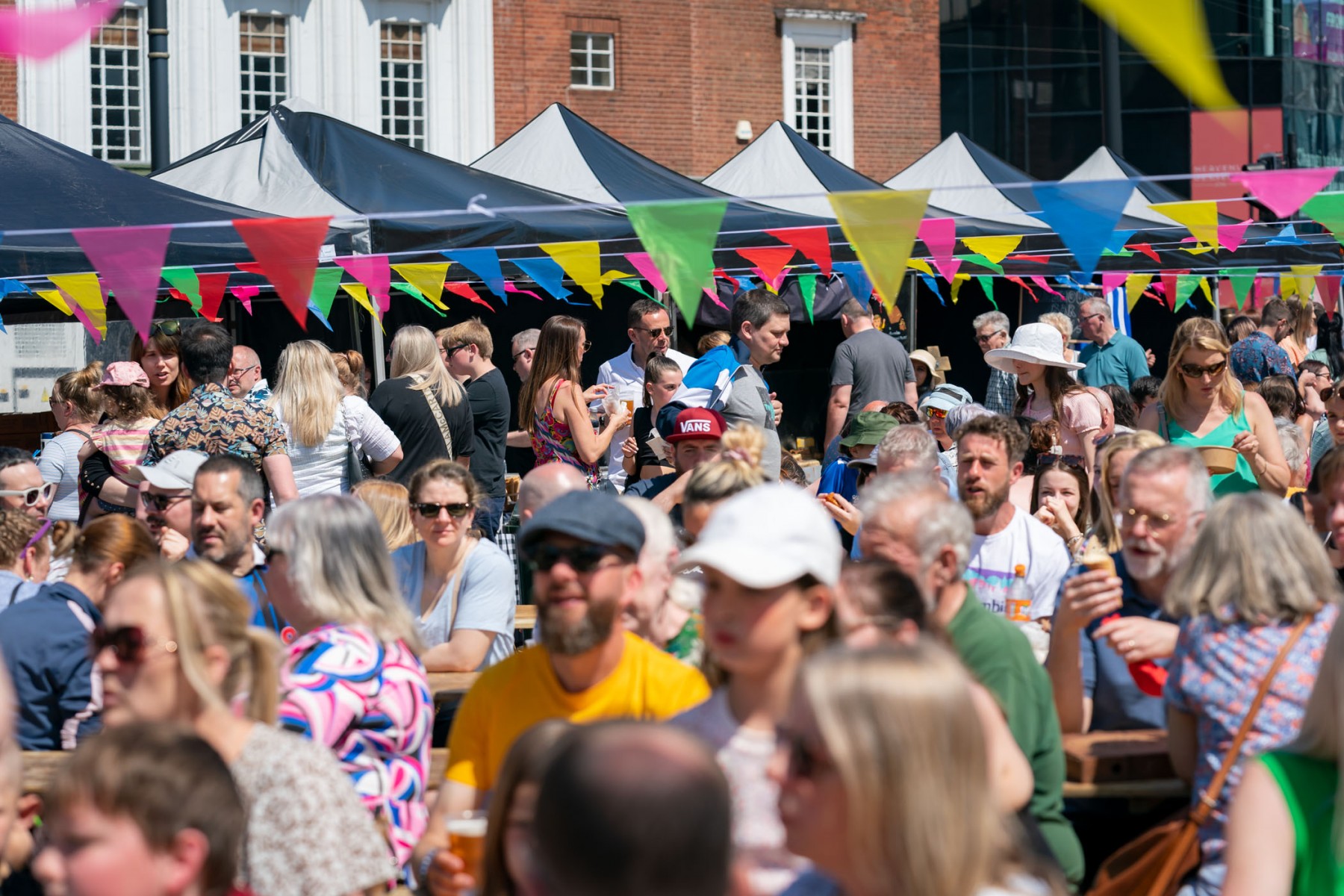
This includes the popular free days out for families, an exciting new urban arts festival, two different food and drink festivals, a lantern parade, the Ignite Fire Festival, a Pride parade, and so much more.
You can also expect live music performances, a new people’s gallery, and even some major international collaborations that are yet to be announced.
Rochdale is taking over the reins from Bolton, which held the title in 2024 / Credit: Rochdale Council
“Rochdale is a place with a rich cultural history, so it is great to name it Greater Manchester’s town of culture as it’s town hall and town centre enter a new era,” commented Greater Manchester Mayor Andy Burnham as the borough was crowned this week.
“Rochdale submitted a fantastic bid for this which, was incredibly exciting and ambitious, while being firmly rooted in its local talent and deep history.

 Emily Sergeant -
5th February 2021
Emily Sergeant -
5th February 2021