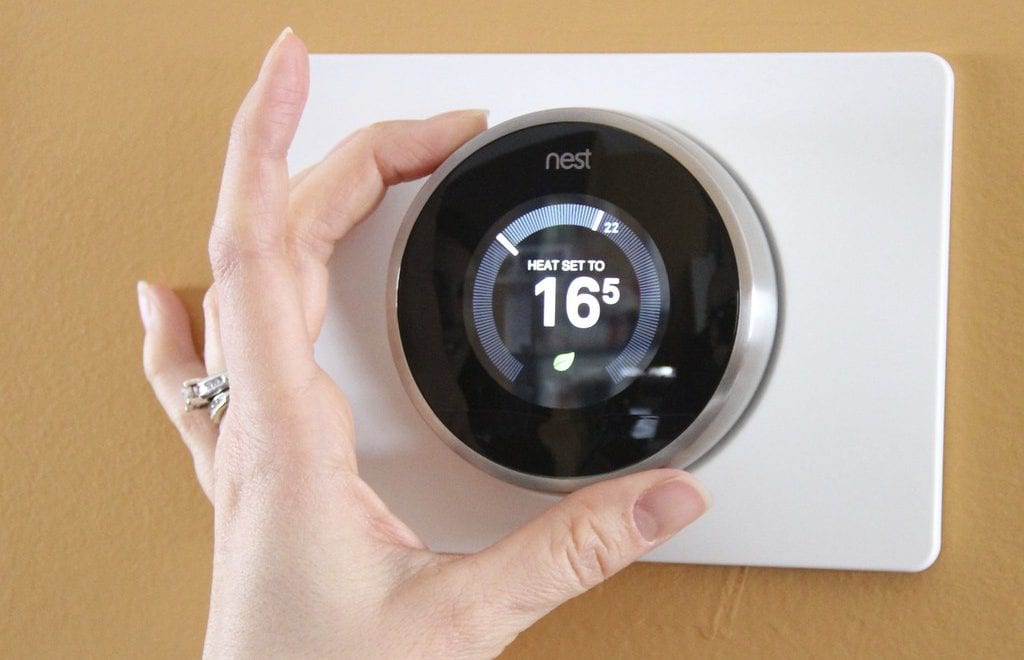
Millions of households right across the UK could potentially find themselves hit with fines of up to a whopping £10,000 for failing to replace their gas boiler.
It’s said that around 17 million UK homes still use gas boilers, but after it was revealed that almost a third of the country’s carbon emissions come from heating systems, ministers have warned that this must be rapidly cut if the country hopes to achieve its goal of becoming carbon neutral by 2050.
The government is therefore said to be discussing a cut-off date of 2035, when the use of gas boilers in existing homes would be phased out. Plenty of time… for most.
A selection of environmentally-friendly alternatives would be required instead.
It comes after reports that gas boilers will be banned in all new-build homes from 2023 – which is two years earlier than initially planned – and after the International Energy Agency (IEA) said last week that gas boilers should be banned from as early as 2025 to aid the fight against climate change.
According to Bloomberg News, it has been reported that government officials are planning to introduce penalties for those who do not comply with the planned eco rules, with enforcement options potentially including “the threat of financial penalties for non-compliance”.
If this presents itself as true, fines are expected to be at the centre of the net-zero plans due to be announced in the coming weeks.
The IEA has also said that from now on, there is no place for new coal, oil, or gas exploration and supplies, and if the government adopts this advice, it will mean that all homes will eventually be required to have low-carbon alternatives to gas boilers fitted in their place.
So, what are the suggested alternatives then?
The first would be an eco-friendly heat pump – which has already faced criticism due to it’s largely unaffordable price that typically costs around £10,000 – and the other option would be to transform properties into electricity-only, with some homes in the UK already set up like this thanks to making use of electric-powered storage heaters, as opposed to radiators.
There are currently around 30,000 heat pumps installed in the UK each year, but the government wants to significantly increase this to 600,000 per year by 2028.
Flickr
Heat pumps use a refrigerant to absorb natural heat found in the air, ground or water, which is then transferred to the cold water system in a house to heat it up and pump it to radiators and hot taps, and as the pumps also run on electricity, this can be sourced in more eco-friendly ways, including the use of solar panels.
A third option would be to install boilers that use hydrogen instead of carbonised gas, which is said to be much better for the environment due to the only by-product of burning hydrogen being water.
While nothing has been confirmed yet, many are speculating that the government’s unveiling of its net-zero plans expected in the coming weeks will bring answers to the conversation.
UK News
Flashbacks: The timelapse of the Trafford Centre construction that’s gone viral
Danny Jones
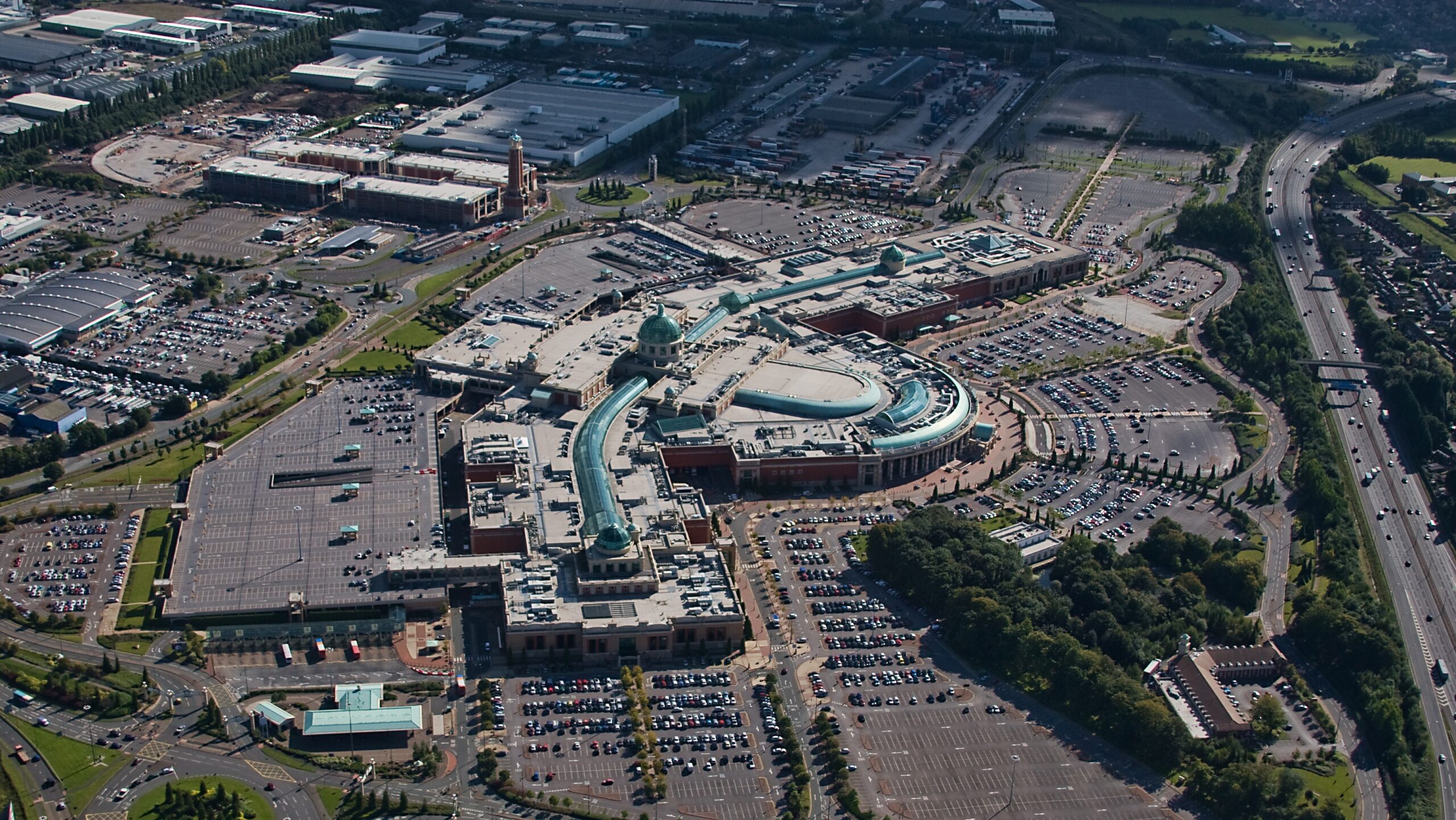
The Trafford Centre might look like some decadent Roman emperor’s palace or as if it was plucked from the heart of Ancient Grecian city, but as anyone old enough to remember it’s opening and/or construction will tell you, it seems strange to think its not even been around for three decades yet.
As Greater Manchester’s and one of the North West’s most famous shopping centres full stop, the iconic attraction first began being built back in 1996, when John Major was Prime Minister, Manchester United were still Premier League champions, Britpop was at its peak and George Michael was number one.
It’s fair to say that a lot has changed since then and although Oasis might be back come 2025, The Trafford Centre and surrounding area are pretty unrecgonisable compared to nearly 30 years ago.
All told, it took approximately 27 months to erect the neo-classical epicentre of all things shopping, leisure, food and fanciness – and here’s what the process looked like:
With the initial 14 million sq ft shopping centre being completed in September 1998 following approximately 810 days of work, The Trafford Centre debuted to the Manc public and beyond.
It took more than 3,000 builders to bring the 60 hectare site to life at the peak of construction and since then the plot has only grown bigger, bolder and more ambitious over time.
Present day, it has everything from cinema screens and a mini Legoland to a Sea Life location, multiple bowling alleys and countless other forms of entertainment beyond just rows of shops and restaurants – hence why it remains busy pretty much year-round.
Back then, British celebrities, popular local names of note, politicians, dignitaries and prominent figures from the retail industry got to visit as part of exclusive preview events in the days before its launch date.
You can see the spectacle and fascination surrounding the official opening event here:
Seems surreal watching this today but the construction of the Trafford Centre was a huge moment not just for 0161 but all of the North.
But of course, the entire complex itself has seen multiple extensions over the years, including massive developments such as Barton Square and The Great Hall.
At the outset, it cost more than £600 million to build The Trafford Centre; the major renovations mentioned above which took place in 2008 cost another £100m and the Trafford Palazzo revamp around a decade later came in at around £75m.
There has and always will be lots of money put behind this intruguing monument to modern consumerism, and big brands will continue to flock to open units within the huge expanse whenever they can: some of the most recent being Archie’s, Flying Tiger, Sephora, Tiffany, Gymshark and more.
We’ll admit the aesthetic still makes us double-take from time to time (though not as much as confused Londoners visiting for the first time), but it’s not like this part of the world hasn’t boasted plenty of other curiosities in the past…
Featured Images — Charles Bowring (via Wikimedia Commons)/The Manc Group
UK News
You can win a free hotel stay for you and a friend as part of Random Acts of Kindness Day
Danny Jones
Fancy doing a loved one a solid and scoring them such much-needed rest and relaxation this month courtesy of a free hotel stay? You’re a kind soul, of course you do.
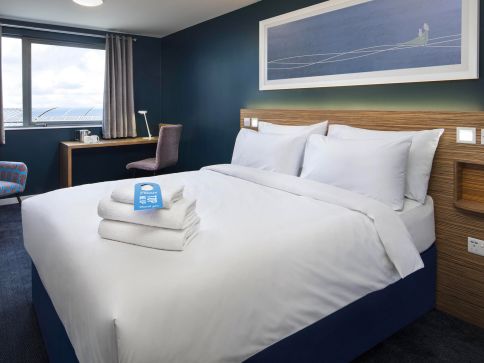
To help celebrate Random Acts of Kindness Day this year, Travelodge are giving away a handful of free hotel stays at locations up and down the UK as a way of letting friends, colleagues and just all-around good eggs know that they’re top bananas.
Now that’s the kind of unconditional positivity we can get behind.
So, if you know someone who could really benefit from a fresh hotel bed, a ridiculously long shower and a lovely British mini-break this year, keep reading.
If you’re wondering how it all works, it’s quite simple – to enter the prize draw and nominate a bestie or beloved, you simply have to tag them in the Instagram reel above.
Alternatively, you can @ them in the comments on Travelodge’s Facebook or nominate them HERE, and make sure you give lots of lovely reasons as to why they deserve it, of course.
But wait for it, here’s the best bit: if they happen to be selected YOU get to win a free hotel stay too. Happy days times two!
Good friends = good prizes on Random Acts of Kindness Day 2025.
And that really is about as complicated as it gets; the lucky winners must book their stay at a Travelodge hotel within a month of winning the prize and enjoy the room within the next 12 months but, other that that, it’s all pretty straightforward and lovely.
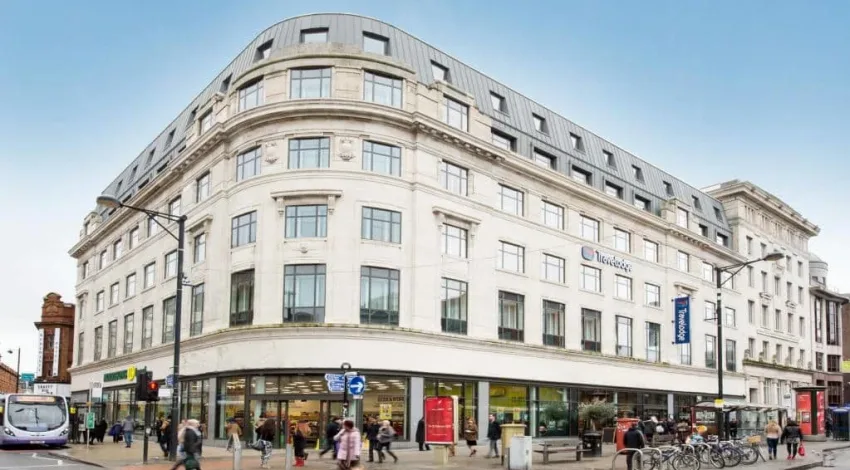
If you love it around so much you have no interest in leaving, there of course multiple Greater Manchester locations (Credit: Travelodge)
One last thing, you must enter by before 11.59pm tonight (Monday, 17 Feb) in order to be eligible and all valid entries will then be selected via a random draw by 27 February 2024.

 Emily Sergeant -
25th May 2021
Emily Sergeant -
25th May 2021